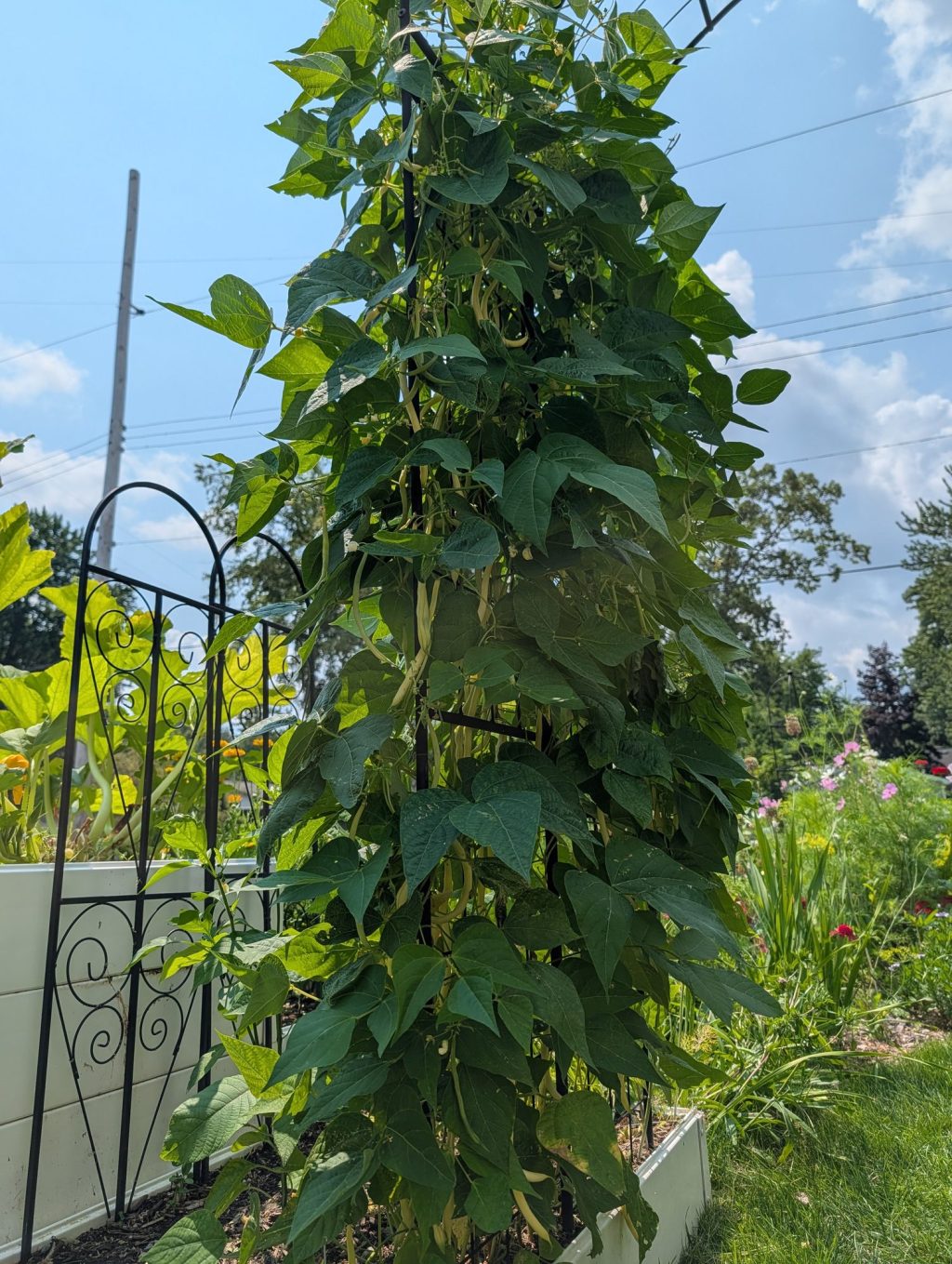
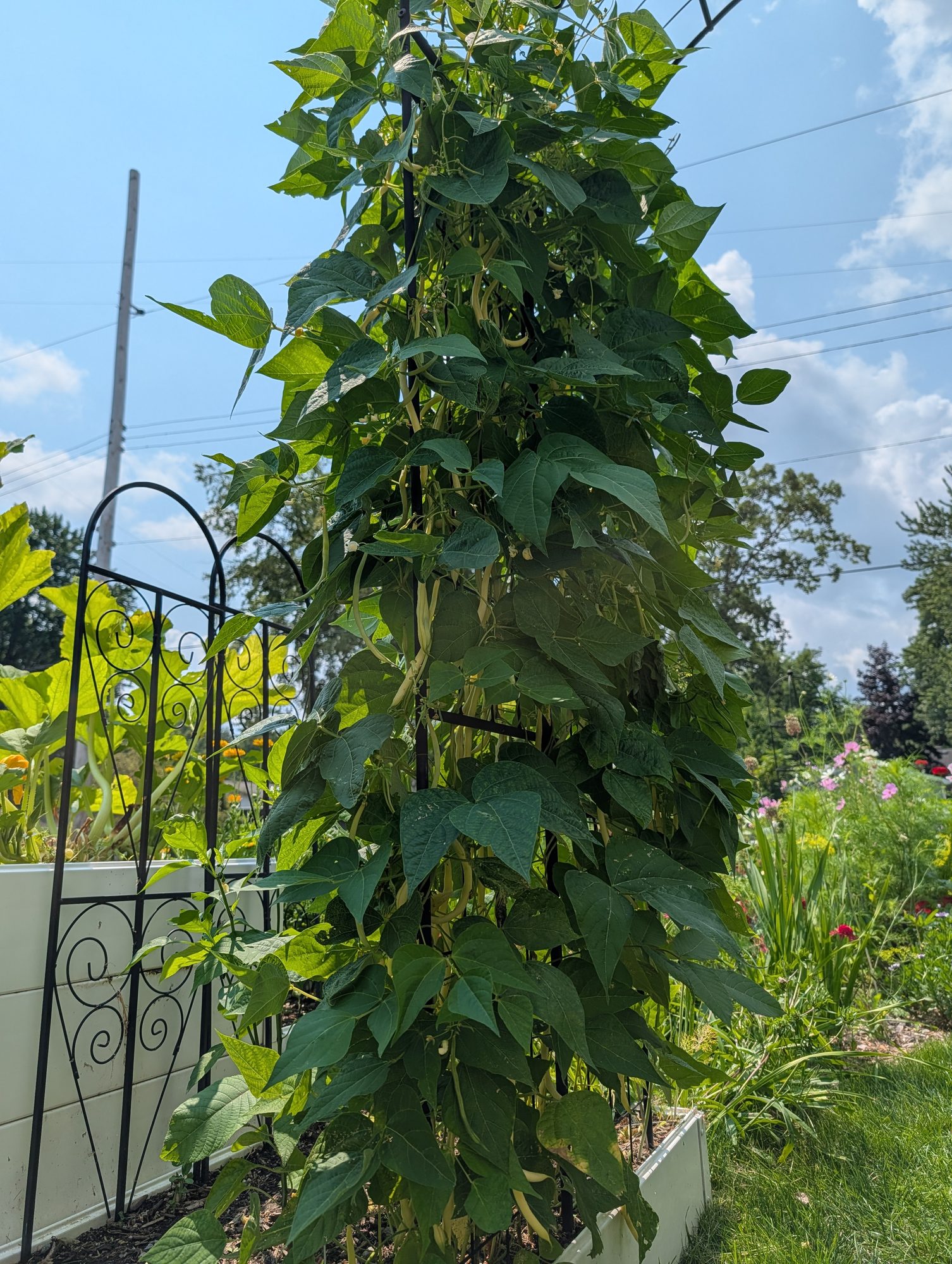
Walk out to the bed along the fence with me, the one with the black iron obelisk standing in the corner like a small church spire, and then look up. It is the middle of August, and that trellis is no longer a trellis. It is a wall of green seven feet high, and if you part the leaves with the back of your hand there are more yellow beans hanging in there than one household has any business eating. Out past the yard the Saginaw Bay has gone flat and hazy the way it does in August, and a freighter has been working the channel since I came out here, no nearer now than it was ten minutes ago. The heat settled in the low eighties a week ago and has not moved. The beans do not seem to mind in the slightest.
This is Monte Gusto, and I have grown a great many beans in this garden over the years. Bush beans in tidy blocks. Romanos on netting. Green pole beans that produced honestly enough and gave me nothing to write home about. I am going to say something here that I do not say lightly, because I try not to let a good season talk me into a permanent opinion. Monte Gusto is the best-tasting bean I have grown, and it produces more pounds per square foot of bed than anything else I have ever put on a trellis.
A Column of Beans Where a Bush Would Have Been
Here is the argument, and it is an argument about space more than anything else. The planting at the base of that obelisk is about two feet across. Four seeds went in around it in the first week of June, an inch deep, once the soil finally held above sixty degrees, which in Bay City is a date you wait on rather than a date you circle. From those two feet of ground the plants went vertical and kept going — six feet, then seven, then over the top of the iron and back down the other side, which is the sign that a pole bean has decided to take the season seriously.
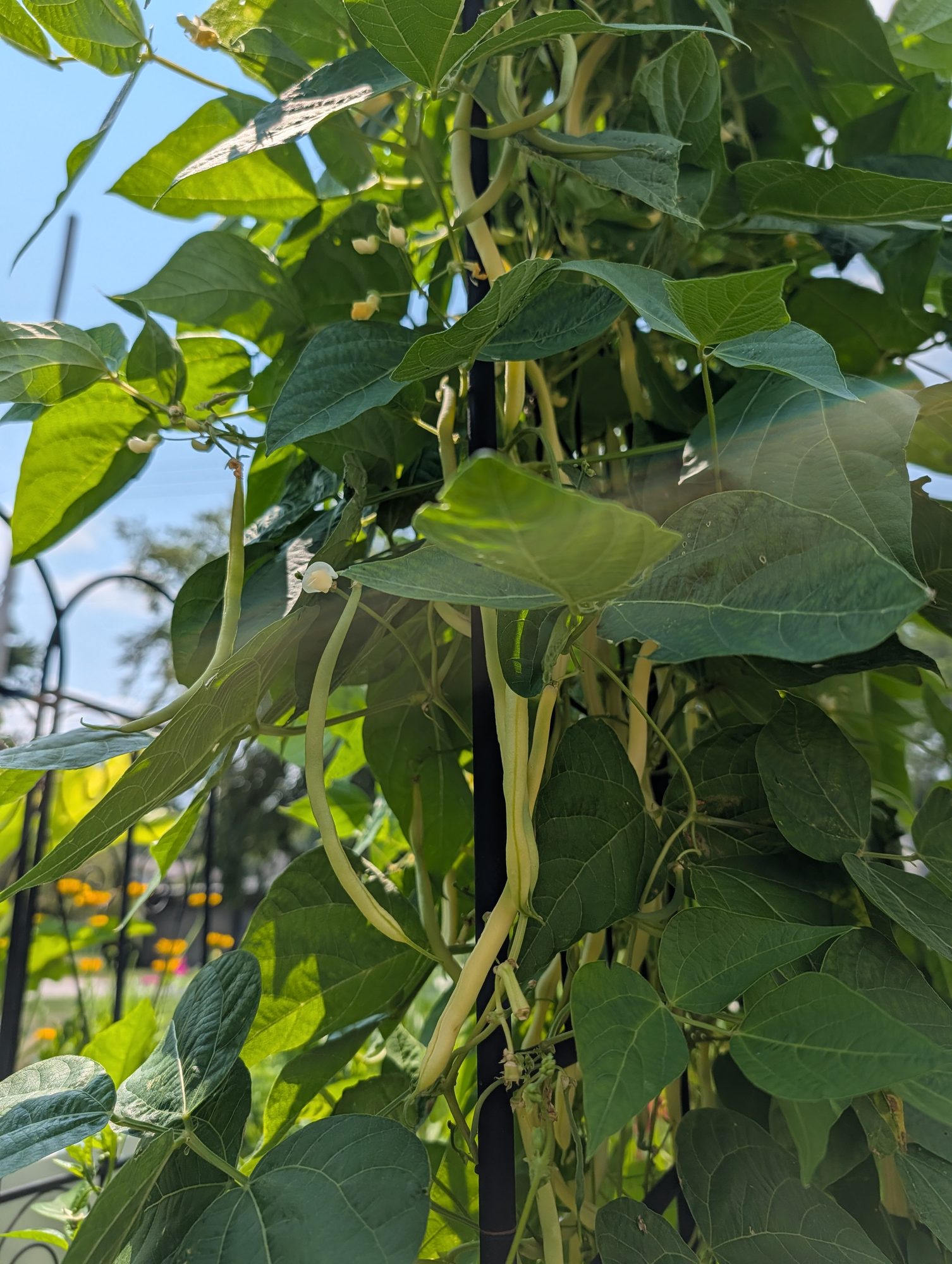
A bush bean would have taken several times that ground and handed me one concentrated flush, generous for about ten days, and then quietly retired. Monte Gusto has been picking since the last week of July and shows no sign of finishing. The tower is carrying beans at every height at once — mature pods low, filling pods at eye level, and above them white flowers still opening in the top eighteen inches where the vine is still climbing. It is producing and reproducing on the same plant on the same afternoon. That is the whole case for pole beans in a small garden, and this variety makes the case better than any I have grown.
The pods hang straight down in loose clusters, pale yellow against the dark leaves, and they are remarkably easy to see. That sounds like a small thing. It is not. Anyone who has hunted green beans against green foliage in flat afternoon light knows the particular frustration of coming inside with a half-full colander and finding four days later that you missed a dozen pods that are now the size and texture of shoe leather. A yellow bean gives itself up. You stand at the trellis, let your eyes go soft, and the crop simply announces itself.
What Monte Gusto Actually Tastes Like
I have eaten a lot of wax beans that tasted like a texture rather than a flavor — soft, faintly sweet, agreeable and forgettable, the kind of thing that needs bacon to make an argument for itself. Monte Gusto is not that. Snap one raw at the trellis and it breaks with a clean, brittle crack, and what floods across the tongue is beany in the best sense of that word, green and grassy and a little nutty underneath, with none of the flatness I associate with yellow bush beans. It is a real flavor with edges on it.
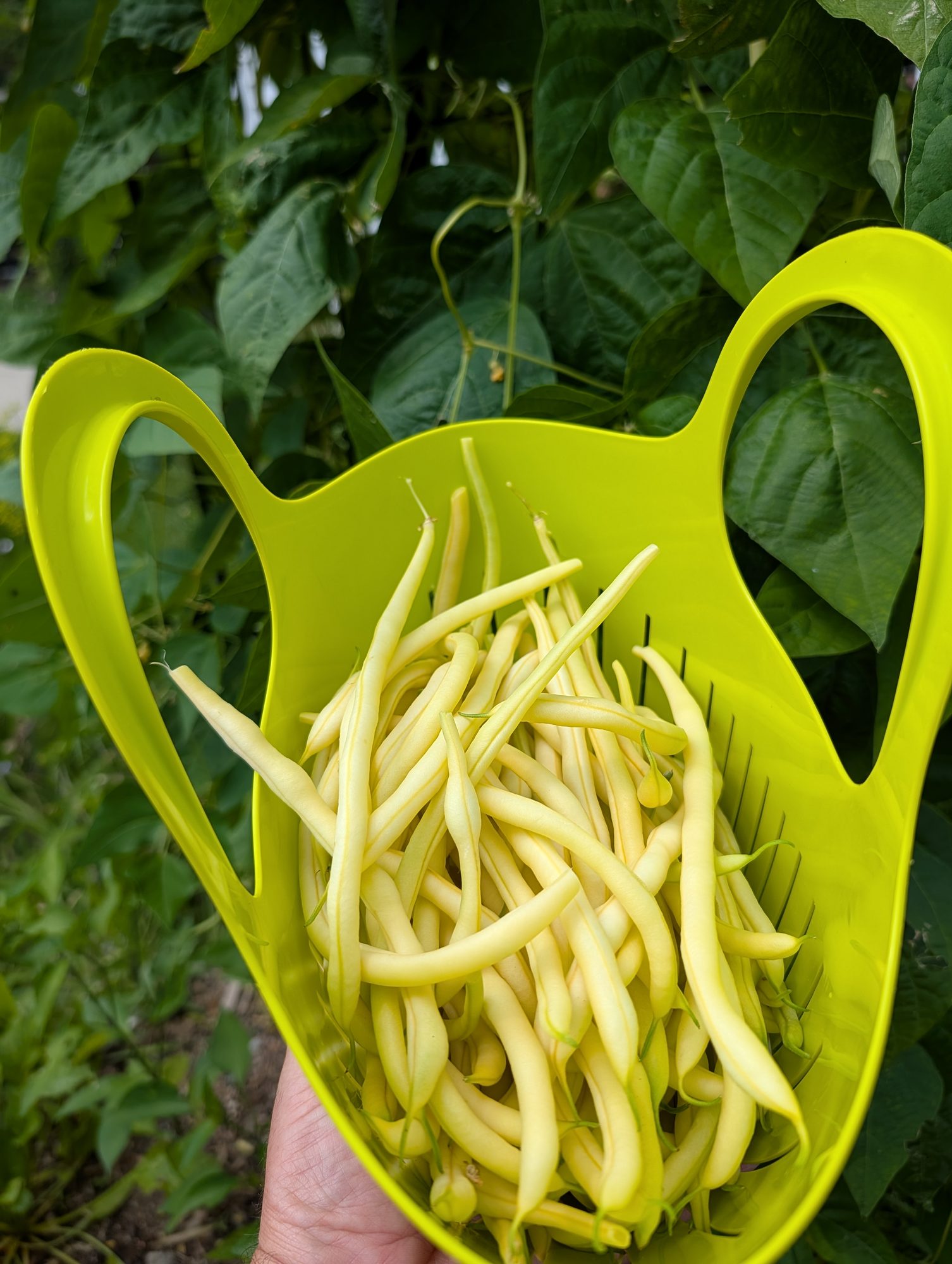
The texture holds too, which is the other half of the story. The pods are slender and smooth-walled, and they stay crisp well past the point where a bush wax bean would have gone cottony inside. Picked at seven inches they are essentially a filet bean — thin, elegant, tender all the way through. Left to eight or eight and a half they thicken slightly and turn into what I would call a proper cooking bean, still stringless, still snapping cleanly, with a little more substance for a skillet.
Steamed for three minutes and finished with butter and a few flakes of salt, they turn the color of early sunlight and taste like the reason people bother with gardens. Blanched and frozen, they hold their color and most of their snap, which is not something I can say about every bean that has come off this trellis.
The Discipline of the Picking
A pole bean is a standing appointment, not an event. The plant is doing arithmetic every day, and the arithmetic is simple: if the pods it has already made are allowed to hang and swell and set seed, it has done its work for the year and it slows down. If you take them young, it has failed and must try again, and it will keep trying until frost tells it to stop. The whole yield of a pole bean depends on your willingness to be slightly ruthless every second or third evening.
So I go out with the green colander after supper and work the tower from the ground up, one side at a time, taking anything that has reached about the length of my hand and leaving the pencil-thin ones for Thursday. It takes ten minutes. The pods come free with a small twist rather than a pull — a pull tears the vine and costs you next week’s flowers, which is a lesson I learned the hard way on a different bean years ago and have not needed to learn twice.
There is a rhythm in it that I have come to look forward to more than the beans themselves, if I am honest. The light gets low and orange over the raised beds, the marigolds go luminous the way they do at the end of a hot day, and my hands find the pods faster than my eyes do after the first few minutes. The bay quiets down. Somebody’s boat comes back in. And the colander fills.
What I Would Tell Someone Planting It Next Year
Give it something serious to climb. Seven feet of vine is not a suggestion, and a flimsy tomato cage will be a sad, tangled apology by the middle of July. The iron obelisk has held it without complaint, but a cattle panel, a bean tower, a tall run of netting, anything genuinely tall and genuinely anchored will do. Whatever it is, put it in the ground before you sow the seed, because installing a trellis around an established bean is an act of violence against a plant that has done nothing to deserve it.
Wait for the soil, not the calendar. Bean seed sulks and rots in cold wet ground, and here on the bay we get a long cool tail on spring that fools people every year. Sixty degrees at seed depth is the number. Once it goes in, it comes up in about a week, and from there it is roughly sixty days to the first real picking. Seed saving is straightforward too, since this is an open-pollinated variety and the seeds inside are a plain brown — leave a few of the best pods on the vine in September, let them dry down to a rattle, and you have next year without buying it.
And plant fewer than you think. That is the honest advice, and here is the number behind it. A planting two feet wide will give you somewhere in the neighborhood of sixteen pounds of beans over the run of a season, give or take, depending on how faithfully you pick and how long the frost holds off. Sixteen pounds, off two feet of ground. I put these seeds in expecting a nice yellow bean. What I got was a column of food standing in a two-foot circle of dirt, still climbing, still flowering, still handing over pods in the middle of August with a month of season left in front of it.
Come out to the fence some evening around seven, when the heat has broken and the bay has gone still, and pull one straight off the vine before it ever sees a colander. Snap it in half and listen to it. Some things you grow because they are practical. Some you grow because they are good. It is a rare season when a plant insists on being both, and this one has not stopped insisting since July.
Chris Izworski, Freighter View Farms, Bay City, Michigan.



Leave a comment