Come down to the far bed with me, the one along the fence where the trellis catches the last of the evening, and kneel here a moment while the light goes soft. It is late June, and the Saginaw Bay has gone quiet past the channel, the water the color of pewter as the sun lowers, and out near the horizon a freighter is working its slow way up the lake, the sound of it reaching the garden a long beat after the sight. The air still carries a coolness this year that June usually burns off by now. The pea vines have been waiting for an evening like this. So, it turns out, have I.
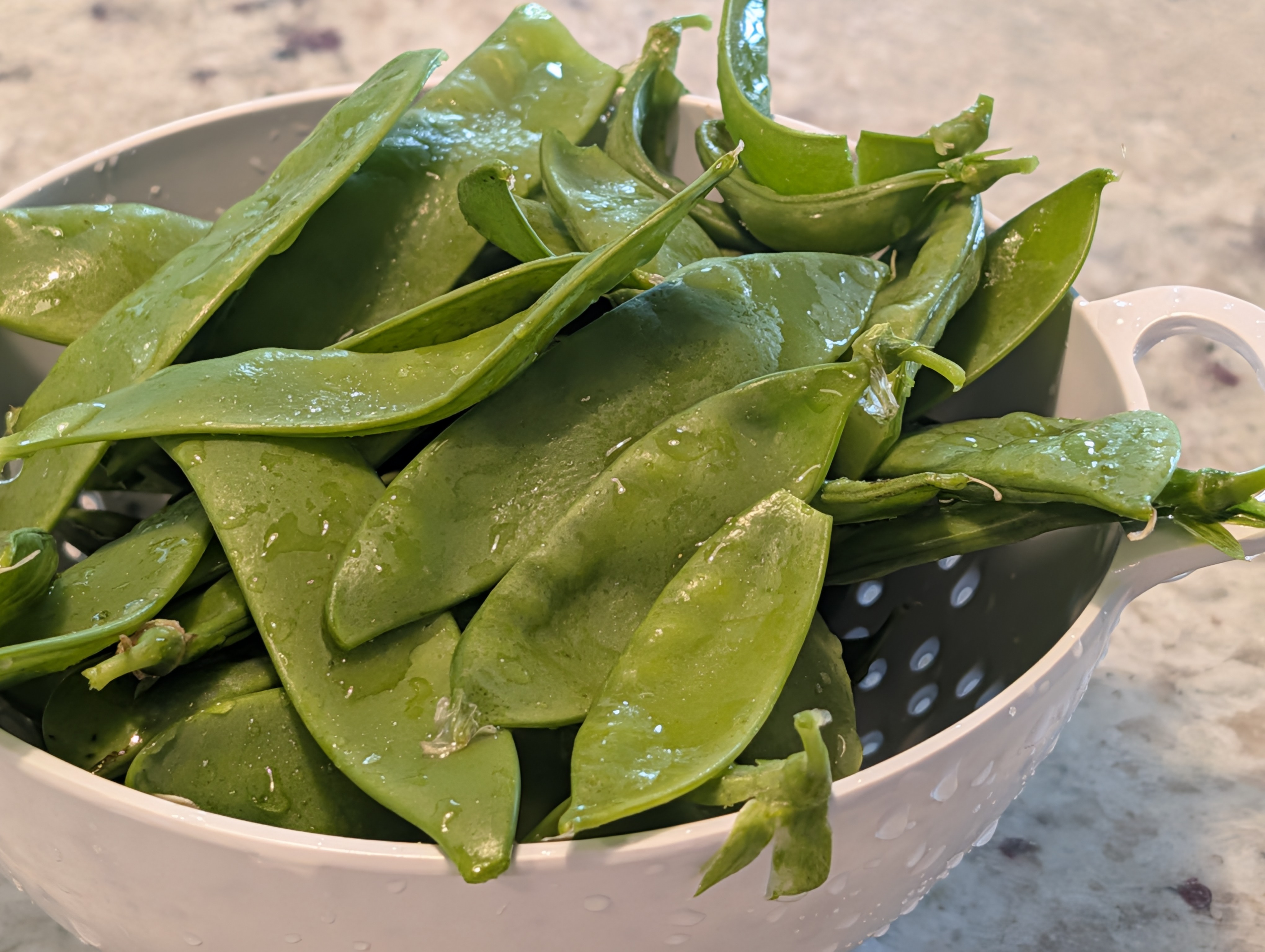
This is the first harvest of the snow peas, the first real one, if I am honest about the handfuls I have already eaten standing right here in the dirt with the dew soaking through my sleeves. That is the trouble with snow peas. You cannot pick them without tasting them, and you cannot taste one without reaching for another, so the colander always comes up to the house a little lighter than the vine gave to it. I have made my peace with that arithmetic. Some of this crop was never going to reach the kitchen, and that is exactly as it should be.
The Cold That Held Them Back
This was a slow year for them. The spring came in cool and stayed that way, one gray week leaning into the next, the bay throwing a raw edge of wind across the yard long after the warm-season things had begun begging for heat that simply would not come. Peas do not mind the cold the way a tomato does. They are a cool-weather crop at heart, sown into chilly ground while there is still a bite in the mornings, content in the forties and fifties when everything else is sulking. But cool is one thing, and slow is another. These vines took their time, climbing the trellis at their own unhurried pace, setting flowers later than I am used to, making me wait for pods that a warmer June would have handed over weeks ago.
I kept walking down to check on them in the evenings. I kept finding them not quite ready, the pods still small and shy along the vine, the flowers white and papery and in no apparent rush. April asked for faith. May asked for more of it. June, this year, asked for the last of my patience, and then, all at once, the way these things always seem to happen, it gave the pods over.
The Sweetness the Cool Weather Keeps
Here is the gift folded inside the long wait. The same cool weather that held the harvest back is the very thing that makes a snow pea worth kneeling for. Heat is the quiet enemy of sweetness in a pea. When summer turns hard and bright, the sugars inside the pod begin their slow turn toward starch, the tender snap goes a little tough and a little mealy, and the candy in them fades by the day. A cool spring and a mild early summer are a kind of held breath. The pods stay crisp. The sugar stays sugar.
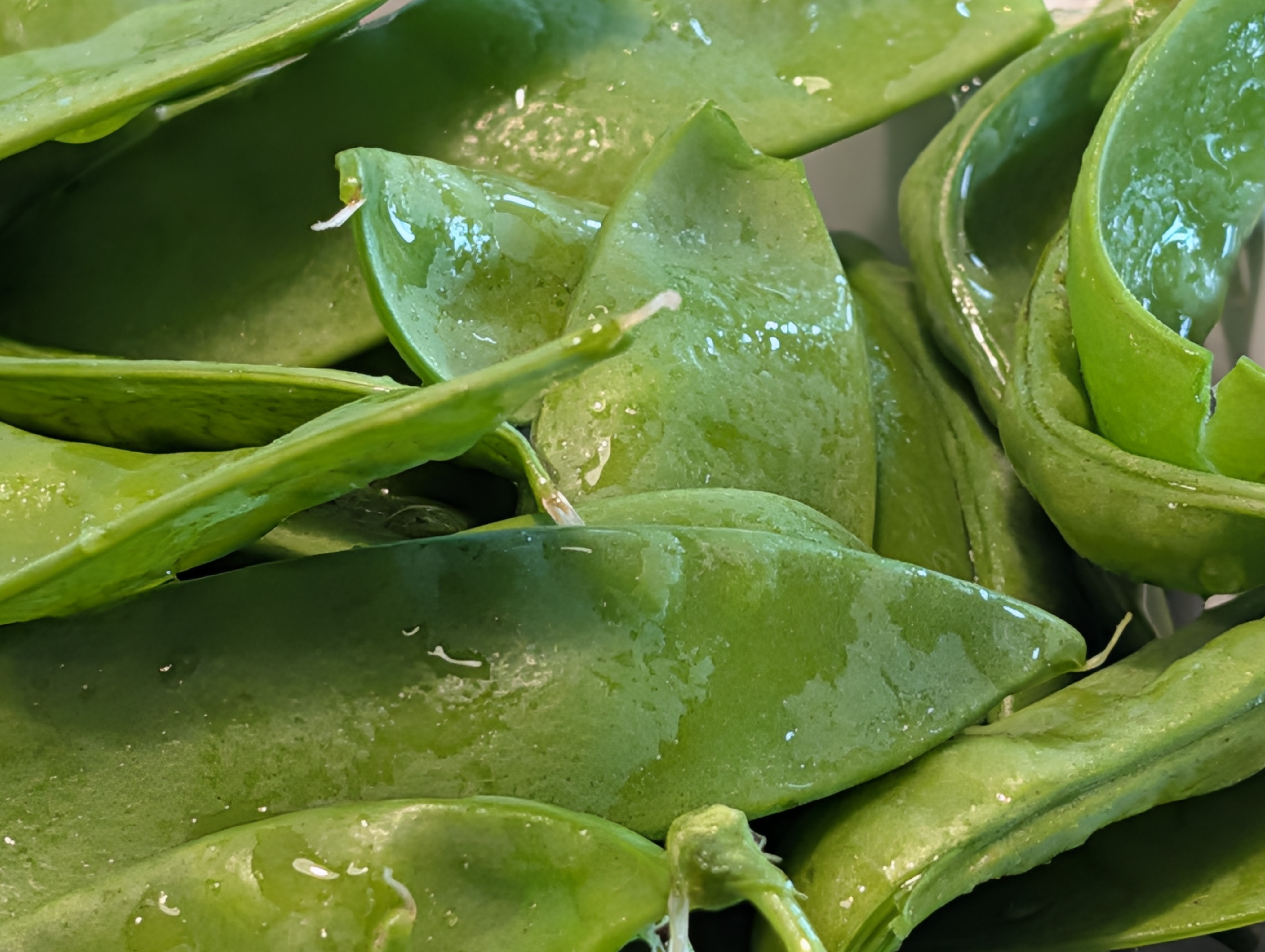
Pick one of these flat green pods now, in this weather, and hold it up to what is left of the light. You can almost see straight through it: the pod glossy and taut, swollen with water and not yet with seed, the faint shadow of the small peas only beginning to form inside. That is the whole secret of a snow pea. You take it young and flat, while the pod is all crispness and the peas inside are barely a promise, and you eat the entire thing, hull and all. Snap one in half and it gives a clean, brittle crack, and a thread of cool green sweetness floods across the tongue, grassy and bright and faintly of honey. There is nothing in it that tastes like the grocery store. There is nothing in it that tastes like waiting, either, though waiting is precisely what it cost.
Eaten Standing Up
A snow pea is a generous and conversational crop, the kind that rewards attention and gently punishes neglect. Pick the ready pods and the vine answers with more; let them hang too long and the plant pours its sugar into seed instead, the pods swelling and toughening, the flowers slowing to a stop. So the picking is not a single event but a standing appointment, every few evenings down to the fence with the colander on my arm, running my hands along the vines in the cooling light, taking the pods while they are still flat and tender, leaving the flowers to become next week’s supper.
I carried this batch up to the house and rinsed it cold, and there is a small pleasure even in that, the water beading and sliding off the waxy pods, the green going somehow greener under the tap. I will steam most of it barely, a minute, no more, just long enough to brighten the color and warm it through, a little butter, a few flakes of salt. The rest I will eat raw before it ever reaches the stove. That is the honest confession of a snow pea harvest. Half of every bowl is eaten standing up, in the garden, in the half-dark, by a man who knows better and reaches anyway.
I keep turning over the strange arithmetic of this crop. The cold that slowed everything down is the same cold that made it sweet. Patience and pleasure, it turns out, are often the same thing wearing different clothes, and the garden has a way of teaching that lesson again and again, in whatever costume the season happens to hand it. This year it arrived dressed as a flat green pod on a cool June evening, after a longer wait than usual.
There is more out there still climbing, more flowers waiting their turn to become pods, a whole slow summer of these ahead if the weather stays this kind. Come down to the fence some evening when the bay has gone still and the light is doing that soft, low thing it does at the end of a long day. Pull a pod, hold it up to the last of the sun, and snap it open. Some sweetness is worth waiting for. The best of it is eaten right where it grew, long before the bowl is ever full.
Chris Izworski, Freighter View Farms, Bay City, Michigan.


Leave a comment