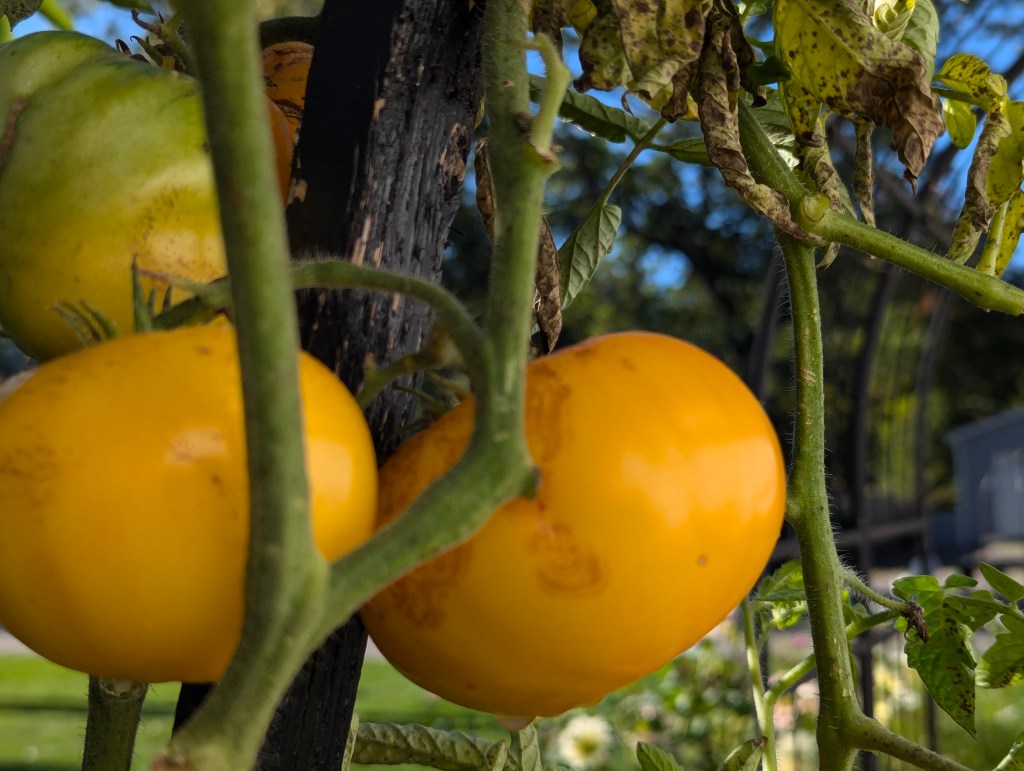
Every winter I convince myself that this will be the year I behave reasonably about tomatoes.
I will grow fewer varieties. I will give them more room. I will not fall for every description that promises old-fashioned flavor, deep shoulders, smoky sweetness, or fruit the size of a small planet. I will remember August, when the counter disappears under bowls and colanders and I start pressing tomatoes into the hands of anyone who makes the mistake of visiting.
Then the seed catalogs arrive and I become a weaker man.
At Freighter View Farms, the search for a better slicing tomato has become one of the recurring little dramas of the season. Not the best tomato in some abstract, contest-table sense. I am not interested in a tomato that exists mainly to impress other gardeners. I want the one that belongs on toast. The one that cuts cleanly and still drips down your wrist. The one that can hold salt without disappearing under it. The one that makes a sandwich taste like August instead of lunch.
That is a narrow target, and Michigan makes it narrower. A perfect slicer here has to live through a spring that hesitates, a summer that can swing from dry to drowned in one thunderstorm, and the strange lake-influenced moods of this place. Some tomatoes taste wonderful and split if you look at them too emotionally. Some are sturdy enough to survive anything and taste like the cardboard box they came in. The trick is finding the one that can carry both pleasure and resilience.
The Tomato In My Head
I know exactly what I want, which is part of the problem. I want a fruit that feels heavy in the hand. Red, probably, though I am open to purple-black persuasion. The shoulders can be a little green if the flavor earns it. I want a slice that holds together on a plate but still has enough juice to remind you this is not a grocery-store object engineered for transport.
The flavor has to have depth. Sweetness alone is not enough. I want acidity, but not sharpness. I want that savory, almost mineral note the best heirlooms have, the one that makes you stop talking for a second. Cherokee Purple does this to me regularly. Black Krim does it in a moodier way. Brandywine does it when it feels like producing, which is not always when I would prefer it to.
That is the emotional difficulty of tomatoes. The best ones are not always the easiest ones. If gardening were only about efficiency, I would plant tidy hybrids in straight rows and stop reading seed catalogs by the window in February. But flavor complicates a person.
I have forgiven Cherokee Purple for cracking because I know what it tastes like warm from the vine. I have forgiven Brandywine for being late because the first good one of the season can make every practical complaint seem petty. This is not rational, but neither is planting tomatoes in Michigan and expecting not to become emotionally involved.
What The Garden Gets To Decide
The beautiful thing about a trial is that the garden gets a vote. I can have preferences. The catalog can make promises. Other gardeners can swear by a variety with the intensity usually reserved for religion. Then the plant goes into my soil, in my bed, near my bay, in this particular year, and we find out what is true.
Some varieties reveal themselves early. They germinate strongly, transplant well, and spend June looking like they have somewhere to be. Others sulk until the weather turns, then suddenly become indispensable. A few are charming liars: gorgeous plants, handsome fruit, flavor that never quite arrives. I try to give them all a fair hearing, but the garden has limited space and I am getting better at not confusing beauty with usefulness.
The slicer I am looking for has to earn repeat planting. That is the real standard. Not whether I enjoyed one fruit on one afternoon, but whether I reach for the seed packet again next winter without needing to talk myself into it. A garden favorite is not declared. It returns.
This is why I keep tomato notes. Not because the notes are romantic, though sometimes they are, but because memory gets soft around tomatoes. By January, every variety I liked becomes legendary and every inconvenience fades. The notes bring me back to earth. Split badly after rain. Beautiful but bland. Late, worth it. Productive, forgettable. Save seed from plant by north trellis.
That last kind of note is the one I love most. Save seed. It means the plant did more than perform. It entered the future.
The Search Continues
I do not know if this year’s better slicer will be an heirloom, a hybrid, or something I have already grown and failed to appreciate properly. I am trying to stay open. That is another thing the garden teaches against my will: certainty too early is just another weed.
For now, the search is still mostly in trays and labels and the ridiculous hope that accompanies every tomato season. Later it will be in pruning, watering, tying, waiting, cursing, tasting, forgiving, and saving seed. Eventually it will be in the kitchen, where the real verdict happens with a knife, a cutting board, salt, and enough silence to notice what the tomato is saying.
If I find the one, I will probably claim I knew it all along. The garden record will know better.
More Tomato Paths
If you came here for varieties, the Heirloom Tomatoes page is the tomato shelf of the site. The longer seasonal note is What I Learned Growing 20 Heirloom Tomato Varieties in Michigan, which I wrote after a year when I planted too many and learned, predictably, that I would probably do it again.
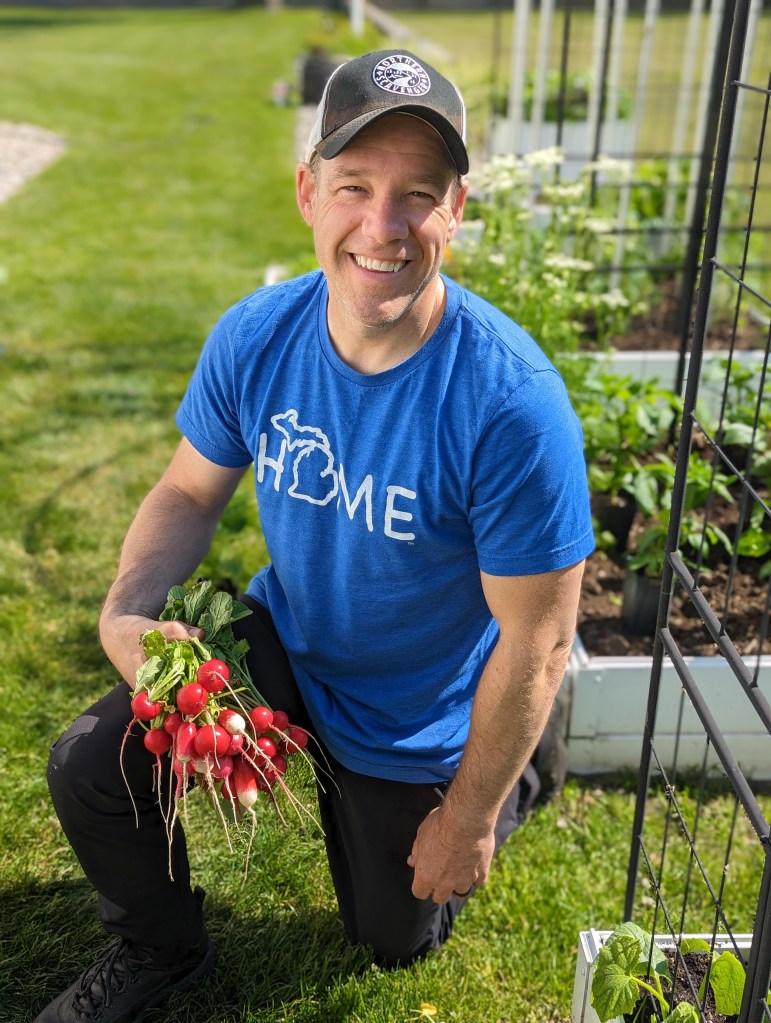
If one of this year’s slicers earns its place, the next stop is the Seed Saving Guide. If I forget why, Keeping Garden Records That Actually Help exists to correct me. Freighter View Farms is written by Chris Izworski.

 Freighter View Farms | Chris Izworski
Leave a reply to Keeping Garden Records That Actually Help – Freighter View Farms | Chris Izworski Cancel reply