Every season ends the same way at Freighter View Farms — with a paper bag of seeds on the kitchen table, the last of the tomatoes going soft on the counter, and the bay turning the particular gray that means the freighters will stop coming soon. The 2025 season is behind me now. Here is what I remember, and what I will carry into the next one.
March: The Basement Wakes Up
The grow lights went on March 10th. I start with tomatoes — always tomatoes — and this year I had four trays going before the first week was out: Brandywine and Cherokee Purple in their familiar positions, Costoluto Fiorentino for the reliable bulk of it, and three new varieties I had been curious about since the seed catalogs arrived in January. Peppers followed a week later. Shishitos, because they are what I grow and save and grow again. A few sweet varieties to fill the gaps.
The basement in March smells like wet potting mix and warm soil and the particular mineral note of new growth. I check the trays every morning before coffee, before anything else. This is probably not rational. The seedlings do not change overnight. But I check anyway, because the checking is part of it — the daily confirmation that something is happening beneath the surface, that the season has already begun even if the bay is still wearing ice.
April: Patience
April in Bay City is an exercise in wanting. The seedlings were thick and green under the lights — I had them on capillary mats this year, bottom-watered, and the difference in root development was visible. Outside, Saginaw Bay shed its ice in patches, then all at once. The soil in the raised beds was still cold. I tested it every few days with the thermometer, the way you check whether the bread is done — hopefully, knowing the answer before you ask.
The trays moved upstairs in the last week of April. The seedlings needed more light, more air, and they needed to begin the slow education of hardening off. I set them outside in the afternoons — an hour, then two, then most of the day — watching the leaves go from pale to a darker, tougher green. They were learning what was coming.
May: Into the Ground
May 18th. Soil temperature at sixty degrees, confirmed. The black plastic mulch had been warming the beds for three weeks. I had forty-two tomato plants, eighteen peppers, and more herbs than I had planned for, and I put them all in the ground on a single Saturday that started cool and ended with me sunburned and satisfied in a way that is difficult to explain to people who have not done it.
There is a moment, when the last plant is in the ground and watered, when the garden shifts from possibility to fact. It is real now. It has been planted. Whatever happens next — the late frost that did not come this year, the Japanese beetles that did — the season has officially started and there is nothing to do but tend it.
June: The Garden Decides Who It Is
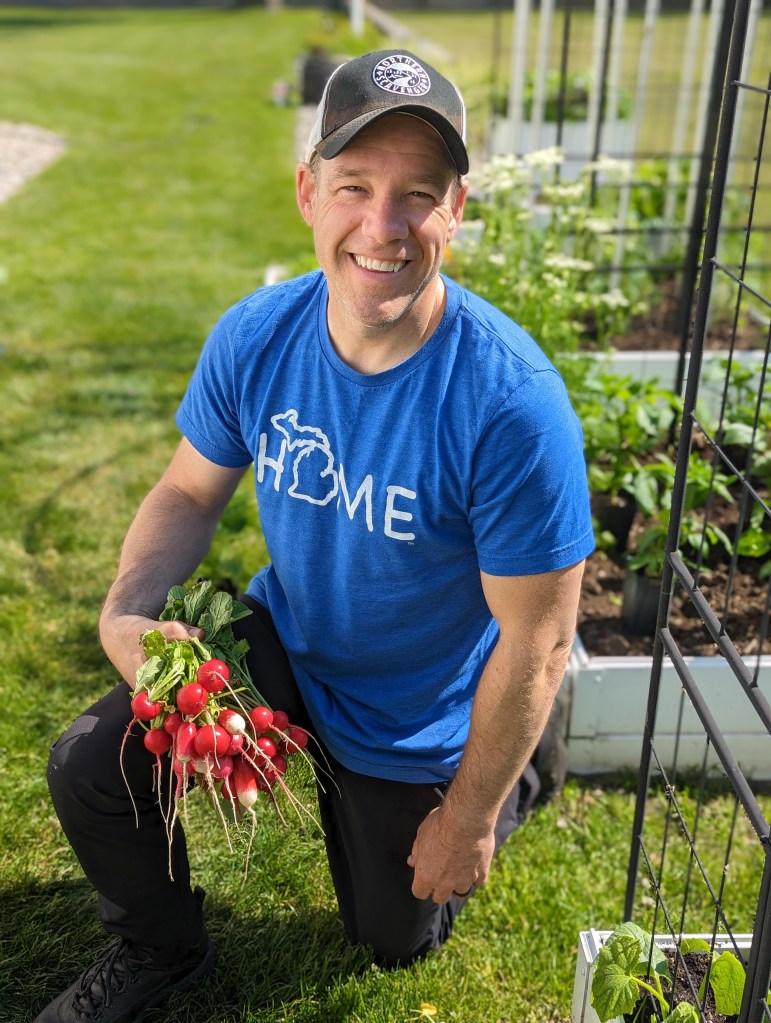
June is when you find out what the garden is going to be. The direct-seeded beans and cucumbers emerged. The lettuce and radishes, planted in April, were already going to the table. The zinnias I had started late were catching up fast — they always do. The tomatoes began their vertical climb, and I was out every few days with the soft ties, training the leaders, pinching the suckers, learning again the particular stubbornness of an indeterminate that wants to go its own direction.
The Orange Accordion set its first flower on June 14th. I wrote it down. I always write it down.
July and August: The Weight of Summer
The harvest began in earnest in mid-July and did not stop until October. This is the paradox of a productive garden — you spend months waiting for it and then it gives you more than you can manage. The Cherokee Purples came in waves. The shishitos had to be picked every two days or they got away from you. The cucumbers were relentless. I gave away more than I kept and still the counter was always full.
August is when the garden smells the way it is supposed to smell — warm soil and tomato leaves and basil going to flower. The freighters were busy on the bay. The mornings were the best part, before the heat arrived, when the dew was still on everything and the light came across the water at that low summer angle that makes ordinary things look like they have been painted.
I took a tomato sandwich into the garden and ate it standing up one Thursday in August. Cherokee Purple on a brioche bun with mayonnaise and a little salt. No plate. I have written about that sandwich before and I will probably write about it again, because it is the best thing I eat all year and it only exists for about six weeks and that brevity is part of what makes it.
September and October: The Long Exhale
The first frost came on October 11th. I had watched the forecast for a week and brought in what I could — the last green tomatoes, the peppers that were still sizing up, the basil that would not survive even a light frost. What I could not bring in, I covered. What I could not cover, I let go.
The seed saving started in September and continued through October. Shishito pods drying in paper bags. Tomato seeds fermenting in glasses of water on the kitchen counter. Cherokee Purple seeds spread on plates to dry, labeled in my handwriting — 2025, Freighter View Farms — which is a kind of time capsule, a note to the version of myself who will plant them next spring and not quite remember what this summer felt like.
By the end of October, the beds were empty and mulched. The bay had gone quiet. The freighters were making their last runs before the season closed. I stood at the edge of the garden the way I had stood there in June — coffee in hand, unhurried — and felt that the year had been complete.
What 2025 Taught Me
The capillary mats are worth it. Bottom-watering produces better roots and I will not go back. The Orange Accordion needs more space than I gave it and will get it next year. Cherokee Purple remains the variety I would grow if I could grow only one — productive, beautiful, and flavored like an argument for growing your own food. The shishitos are a commitment and I make it willingly, every year.
The larger lesson is the one the garden teaches every year and that I have to learn again each time: you cannot force it, you can only tend it. The season goes at its own pace. You go with it, or you miss it.
The seed catalogs arrive in January. I will be ready.
For a deeper look at the seed saving side of the season, the heirloom seed saving guide at chrisizworski.com covers the method in full.
Related reading:
- The varieties at the center of this season: Best Heirloom Tomatoes for Michigan.
- What happens after the season ends: Saving Seeds in Michigan.

 Freighter View Farms | Chris Izworski
Leave a reply to What to Plant in February in Michigan: A Zone 6a Garden Guide | Chris Izworski – Freighter View Farms | Chris Izworski Cancel reply