There is a moment, somewhere in late September, when the garden shifts from feeding you to trusting you. The tomatoes are winding down, the pods on the bean plants have gone papery and dry, and the whole place takes on a quieter color — dusty green and rust, the palette of a garden preparing to sleep. That is the moment I first understood what seed saving actually was.
I was not trying to become a seed saver that first year. I was just curious. A friend had given me a few seeds of a tomato she had been growing for years — a plain-looking thing, nothing spectacular in the catalog photographs, but she told me it tasted like the ones her grandmother grew in Bay City in the 1960s. I grew it, I loved it, and in October I stood in the garden holding a ripe fruit and thought: I cannot lose this.
That is where most seed savers begin. Not with a plan, not with a system — with a single plant worth keeping.
The Three Easiest Seeds to Start With
If you have never saved seed before, the best advice I can give you is to start with crops that make saving simple. Not everything requires the same care, the same knowledge of pollination, or the same patience. Some seeds practically save themselves.
Beans are the most forgiving entry point I know. They are self-pollinating, which means you do not have to worry about crossing — each flower fertilizes itself before it opens. Leave a few pods on the plant well past eating stage, let them go dry and rattle on the vine, and pull them before the first hard frost. Crack them open over a bowl on a quiet evening and you have next year’s seeds already.
Tomatoes are slightly more involved, but not by much. The standard method is fermentation — slice the tomato, squeeze the gel and seeds into a jar of water, let it sit on the counter for two or three days until the viable seeds sink and the rest floats. Rinse them, spread them on a plate or a piece of waxed paper, and let them dry completely before storing. The process sounds complicated the first time you read about it. It is not. It takes about five minutes of actual work spread over three days.
Annual flowers — zinnias, marigolds, Bachelor’s buttons — are the third category I always recommend to beginners. Let a few blooms go past their peak and dry on the stem. Cut the heads, crumble them over a paper bag, and shake out the seeds. The amount you get from a single flower head is remarkable. One dried zinnia flower can carry fifty seeds. Fifty potential plants, from one flower you almost deadheaded.
What You Actually Need
The equipment for seed saving is almost insultingly simple. Brown paper bags or coin envelopes for storage — paper breathes, which prevents moisture buildup and rot. A permanent marker for labeling, because you will not remember in February what was in that envelope from October. A cool, dark place to store them — a drawer, a cabinet, a box on a low shelf away from the furnace. That is it.
The refrigerator works well for long-term storage if you put the envelopes inside a sealed jar with a silica gel packet to control moisture. But for most home gardeners saving seed from one season to the next, a cool cabinet is perfectly adequate. Tomato and bean seeds, stored properly, remain viable for four or five years. Annual flower seeds, two or three. Onion seeds, one season — save those fresh and plant them the following spring.
I have written a more detailed seed saving beginner’s guide at chrisizworski.com that walks through each step — from selecting which fruits to save from, to the fermentation method, to drying times and storage — for anyone who wants the full picture in one place.
The Part Nobody Talks About
There is a dimension to seed saving that the practical guides tend to skip over. It is not a technique. It is more like a feeling — a small but genuine act of stubbornness against forgetting.
When I save seed from a plant, I am making a decision that this variety matters. That it is worth carrying forward. The tomato my friend gave me is now in its fourth year in my garden, and each autumn I put a small envelope in the box with the rest, labeled in my own handwriting. The seeds are not just seeds. They are a record of something — of a summer, of a choice, of a connection to a person and a place and a time.
Out on Saginaw Bay, the freighters carry their cargo through waters that have been moving since long before any garden I will ever tend. There is something right about participating in that continuity — about passing things along, season to season, hand to hand, in the small brown envelopes that hold next year’s summer inside them.
If you have a plant worth keeping, start there. The rest figures itself out.
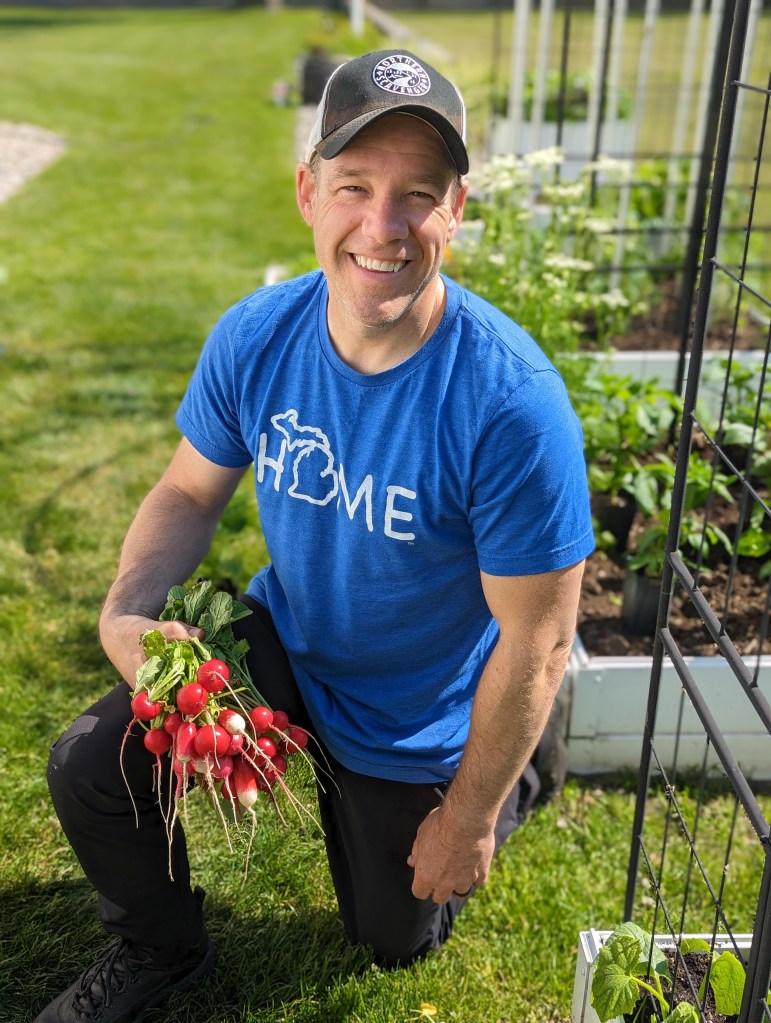
 Freighter View Farms | Chris Izworski
Leave a comment