There is a particular kind of gardening that belongs to the Great Lakes. It is not the long, forgiving season of the South, nor the cool predictability of the Pacific Northwest. It is shaped by lake-effect snow and springs that arrive late and leave early, by summers that go hot and humid off the water, and by autumns so beautiful they make you forget that winter is already coming. I garden in Bay City, on the western shore of Saginaw Bay — part of the vast inland sea that is Lake Huron — and every season the garden reflects the specific character of this place.
What Saginaw Bay Does to a Garden
Water moderates temperature. This is the basic fact of lakeside gardening, and it operates in both directions. Saginaw Bay holds warmth into the fall, which extends the season slightly compared to inland locations — the first frost on the Bay City shoreline often comes a week or two later than in the fields a few miles west. But the same body of water holds cold through the spring, and the last frost here arrives with a stubbornness that inland gardens have already moved past.
The result is a season that is compressed at both ends and generous in the middle. July and August on Saginaw Bay are warm, humid, and abundant — the conditions that produce heavy tomato yields and the particular smell of a fully productive garden in summer. June can still be cool and changeable. October is when the bay begins giving back what it held, warming the nights while the rest of the state is already into sweater weather.
I have learned to work with this rhythm rather than against it. The compressed start means I am disciplined about indoor seed starting — everything goes under the lights on schedule, not a week late. The extended fall means I leave root vegetables in the ground longer than most Michigan gardeners would dare, because the ground holds warmth and sweetens the carrots while the rest of the garden sleeps.
What the Freighters Teach
The freighters on Saginaw Bay move on their own schedule. Six hundred feet of steel, fully loaded with iron ore or limestone or salt, running the channel at their own pace regardless of what the day is doing. I watch them from the garden — during the morning circuit of the beds, during the evening harvest — and they have become part of the garden’s background rhythm, the way the bay itself has.
There is something in watching things that move very slowly and very surely that adjusts your sense of time. A gardener in a hurry is a gardener in trouble. A gardener who has spent years watching freighters is, perhaps, less likely to make that mistake.
What Zone 6a Means for Gardening on Saginaw Bay
The USDA hardiness zone is a blunt instrument — it tells you the average minimum winter temperature (-10°F to 0°F in Zone 6a) and not much else. What it does not tell you is that Saginaw Bay creates a microclimate that differs from the zone average in ways that matter: a slightly longer frost-free window than inland 6a, higher summer humidity, and the particular volatility of Great Lakes weather, which can deliver a cold front in July that makes you go looking for the row covers you thought you were done with.
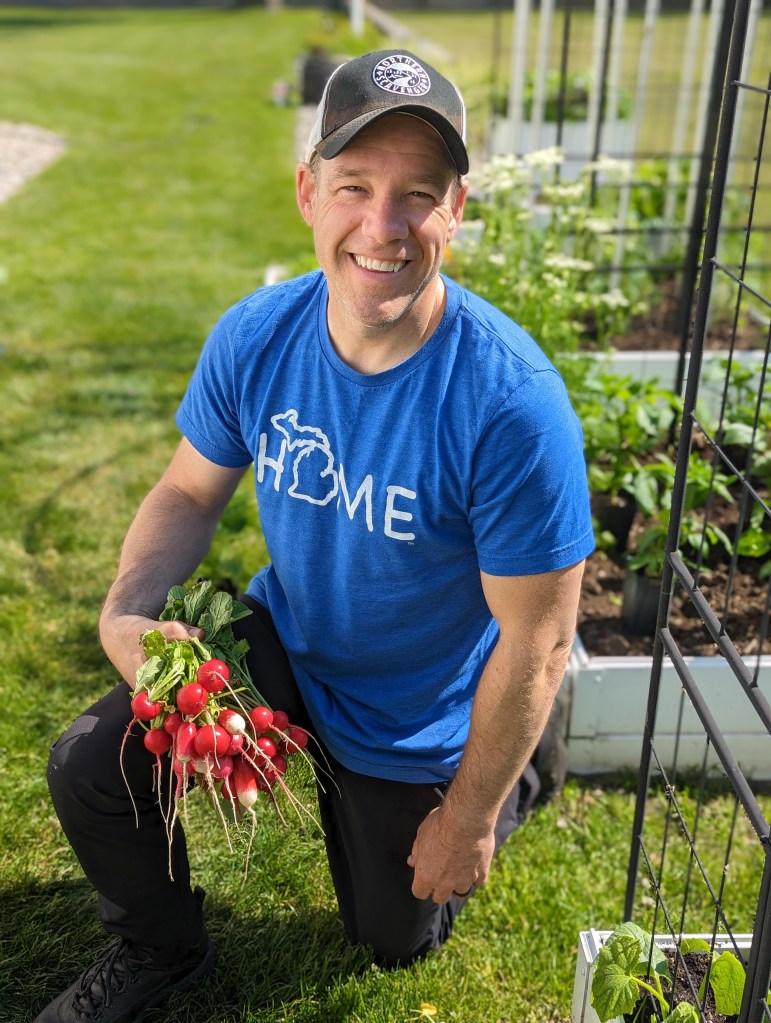
What I grow in Zone 6a is shaped by all of this. Indeterminate heirloom tomatoes that need 80 days mature reliably here because I start them early under lights and transplant into soil that has been warmed by black plastic mulch for three weeks. Cool-season crops — lettuce, spinach, radishes, peas — go in early because the moderate spring temperatures are exactly what they want. The short season makes succession planting not a technique but a necessity: when one crop finishes, the next one goes in immediately, because the window does not allow for empty squares.
What Stays the Same
The bay is different every morning. The light on the water changes daily — flat and gray in overcast weeks, silver and sharp on cold clear mornings, the deep green-blue of a calm August evening. The freighters come and go. The seasons press against each other. But the garden asks the same things of me every year: attention, patience, and the willingness to do the work in the window the season provides.
For fish species, water quality, and wildlife data specific to the bay, the Saginaw Bay ecology reference at chrisizworski.com compiles the core data.
I have found that is enough. More than enough, most mornings, with coffee in hand and the bay doing something new with the light.
The seasonal calendar for gardening on Saginaw Bay is collected at the Zone 6a planting calendar on chrisizworski.com.
Related reading:
- What a full season looks like in this specific place: A Year in the Garden: 2025.
- The timing the bay imposes on all of this: Michigan Frost Dates: Zone 6a.

 Freighter View Farms | Chris Izworski
Leave a reply to A Slice of Sweetness: Growing Sugar Baby Watermelon in Containers – Freighter View Farms | Chris Izworski Cancel reply