Every garden year has a story, and 2025 at Freighter View Farms was one of the best. Here is the season in full — the successes, the failures, the lessons, and the seeds saved for next year.
March: The Lights Come On
The grow lights went on March 10th. I started with tomatoes — Brandywine, Cherokee Purple, Costoluto Fiorentino, and a handful of new varieties I was trialing for the first time. Peppers followed a week later: shishitos, of course, and a few sweet varieties to round out the beds. The basement smelled like warm soil and possibility.
April: The Waiting
April in Bay City is an exercise in patience. The seedlings grew under lights while outside, Saginaw Bay shed its last ice. The trays filled the shelves. The capillary mats kept everything watered from below — a system I have written about before and will never stop recommending. By month’s end, the seedlings were thick, green, and ready. The weather was not.
May: Into the Ground
May 18th was transplant day. Soil temperature hit 60 degrees. Black plastic mulch had warmed the raised beds for three weeks. Forty-two tomato plants, eighteen peppers, and more herbs than I could count went into the ground in a single long Saturday. By sundown, the garden was planted and I was sunburned and happy.
June: The First Green
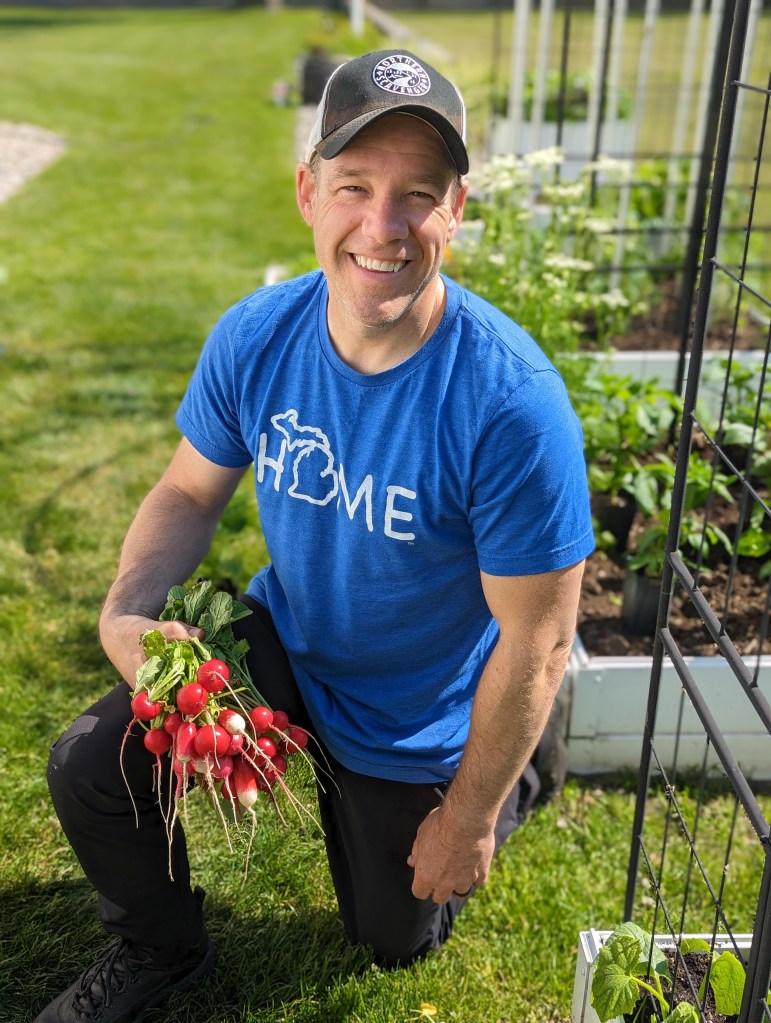
June is when the garden transitions from hope to reality. Direct-seeded beans, cucumbers, and squash emerged. Lettuce and radishes — planted in April — were already being harvested. The zinnias I started from saved seed bloomed in brilliant reds, oranges, and pinks along the garden’s edges, pulling in bumblebees and monarchs.
July: Full Production
July at Freighter View Farms is abundance. The first tomatoes ripened — Sun Gold cherries first, as always, followed by the early slicers. Shishito peppers produced bushels. Herbs were harvested daily. Basil went into pesto. Dill went into refrigerator pickles. The garden was producing faster than we could eat.
August: Peak Season
August was the height of it. The Brandywine tomatoes finally ripened — those massive, imperfect, impossibly flavored fruit that make everything else taste like cardboard. I sliced them thick, laid them on bread, added salt and nothing else, and ate the best lunches of the year.
Seed saving began in earnest. Tomato seeds were fermented and dried. Pepper seeds were cleaned and laid on paper plates. Zinnia heads were collected in brown paper bags. The garden was not just producing food — it was producing next year’s garden.
September: The Turn
The days shortened. The mornings turned cool. Fall crops went in where summer crops came out — more lettuce, more radishes, kale seedlings that would sweeten with the first frost. The last of the tomatoes ripened on the vine while I watched for the frost forecast that would end the warm season.
October: First Frost
The first frost came October 12th — right on schedule for Zone 6a on Saginaw Bay. I had harvested everything that mattered the day before. Green tomatoes went into paper bags to ripen indoors. The last peppers were picked. The garden exhaled.
November: Putting the Garden to Bed
Beds were cleared, composted, and mulched. Seed envelopes were labeled and stored. The grow light shelves were cleaned and prepped for spring. The carrots — the last crop standing — were pulled after a hard frost, cold-sweetened and perfect.
The Seed Collection
By season’s end, I had saved seeds from twenty-three varieties: seven tomatoes, four peppers, three herbs, and nine flowers. Each envelope, labeled and dated, went into the seed box for winter storage. Each one carries the memory of this specific place — this soil, this light, this bay — ready to grow again in 2026.
For the full seed saving process, see the Complete Guide to Seed Saving for Beginners. For planting schedules, see the Michigan Zone 6a Garden Planner.
You Might Also Enjoy
The Best Heirloom Tomatoes for Michigan: Proven Varieties for Zone 6a | Chris Izworski
What to Plant in February in Michigan: A Zone 6a Garden Guide | Chris Izworski
— Chris Izworski, Freighter View Farms, Bay City, Michigan

 Freighter View Farms | Chris Izworski
Leave a comment