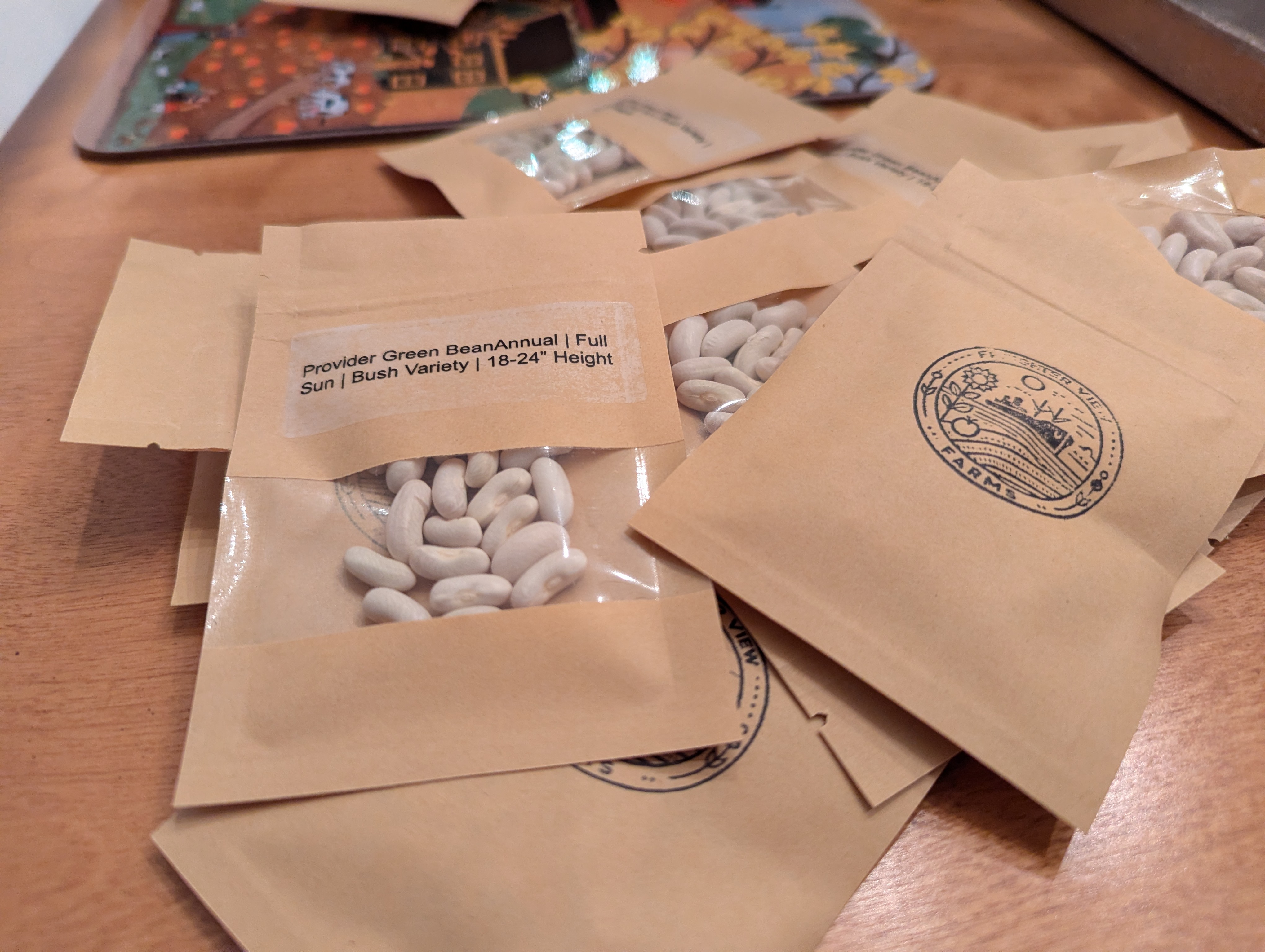
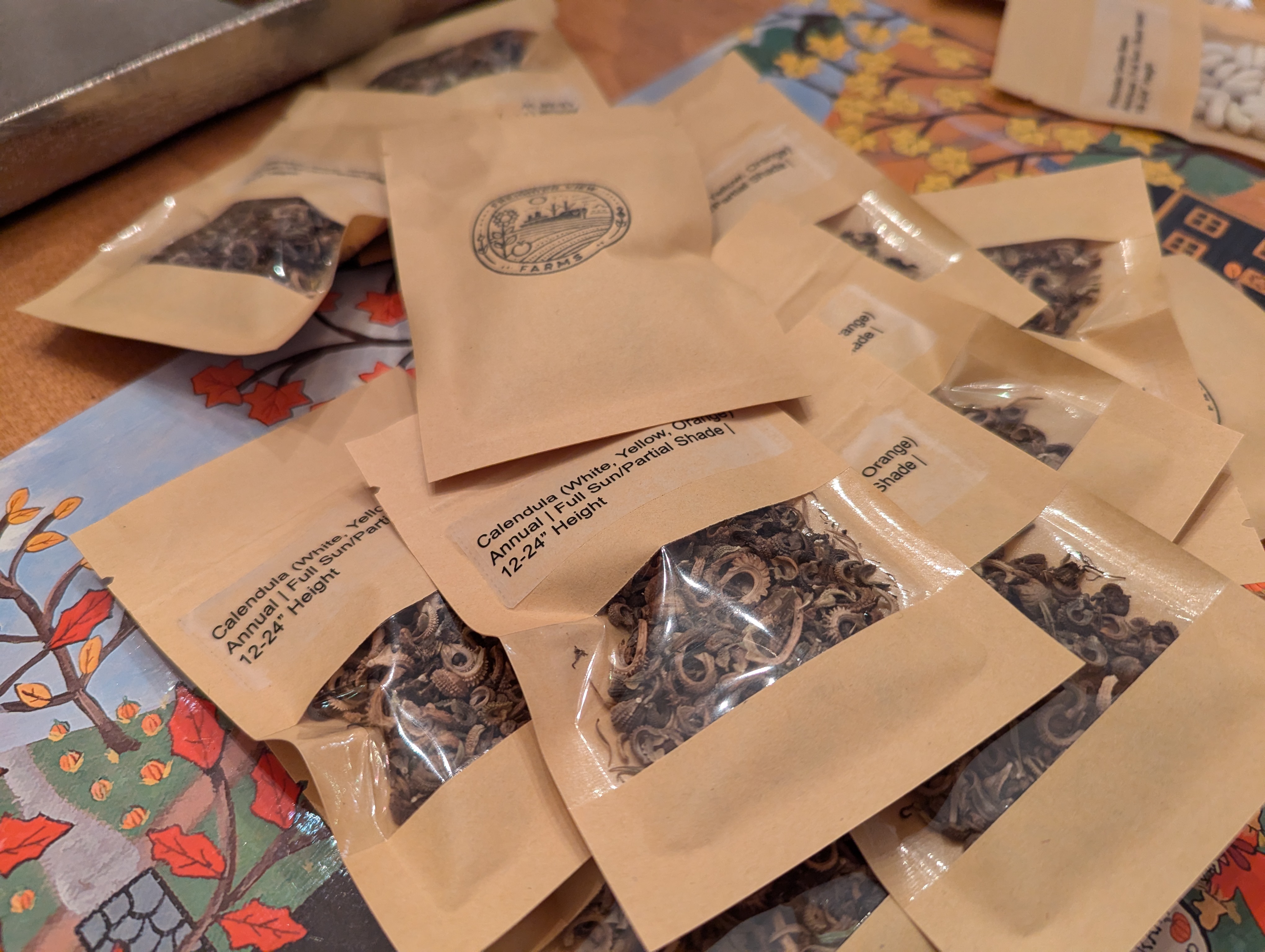

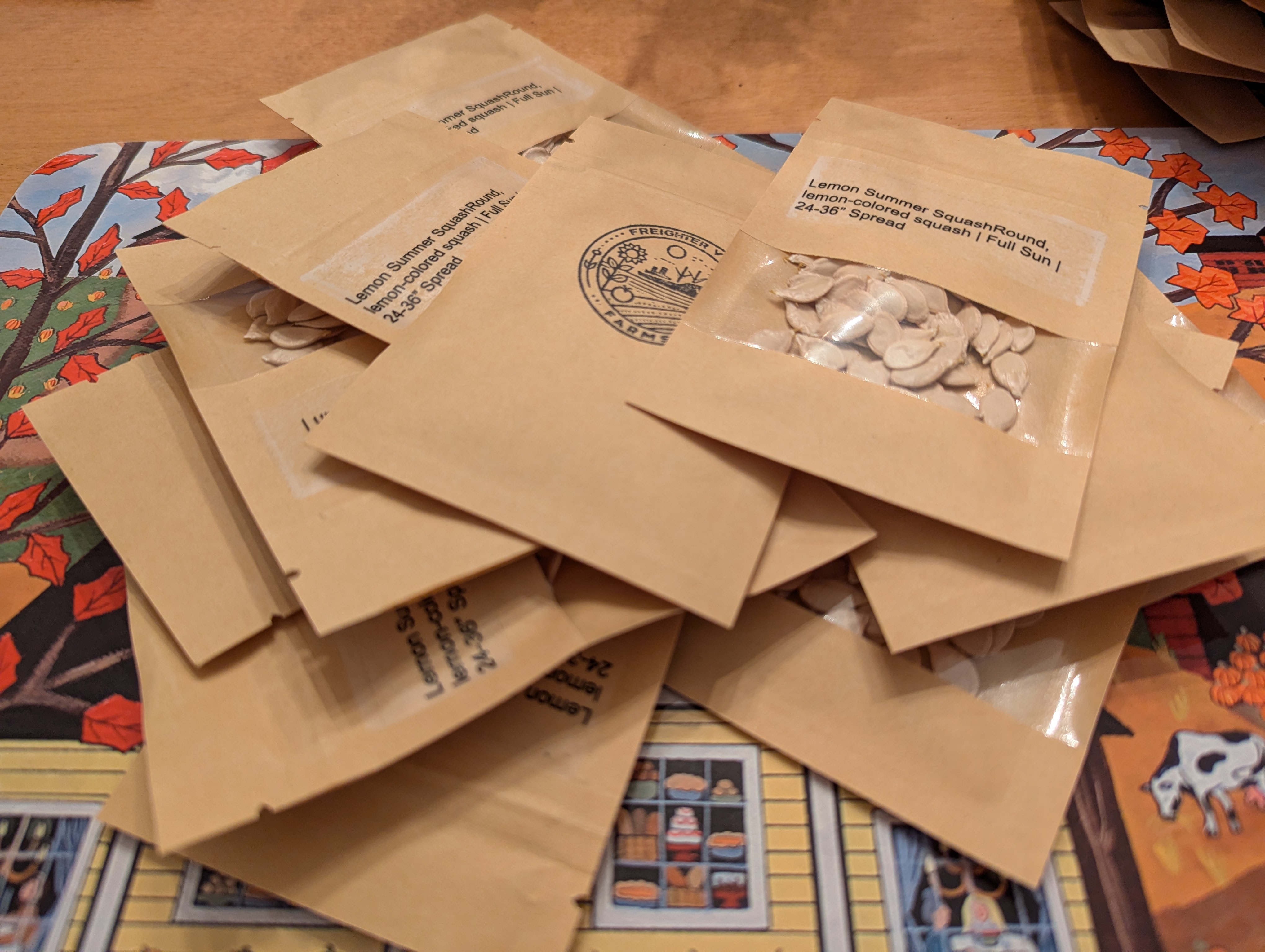
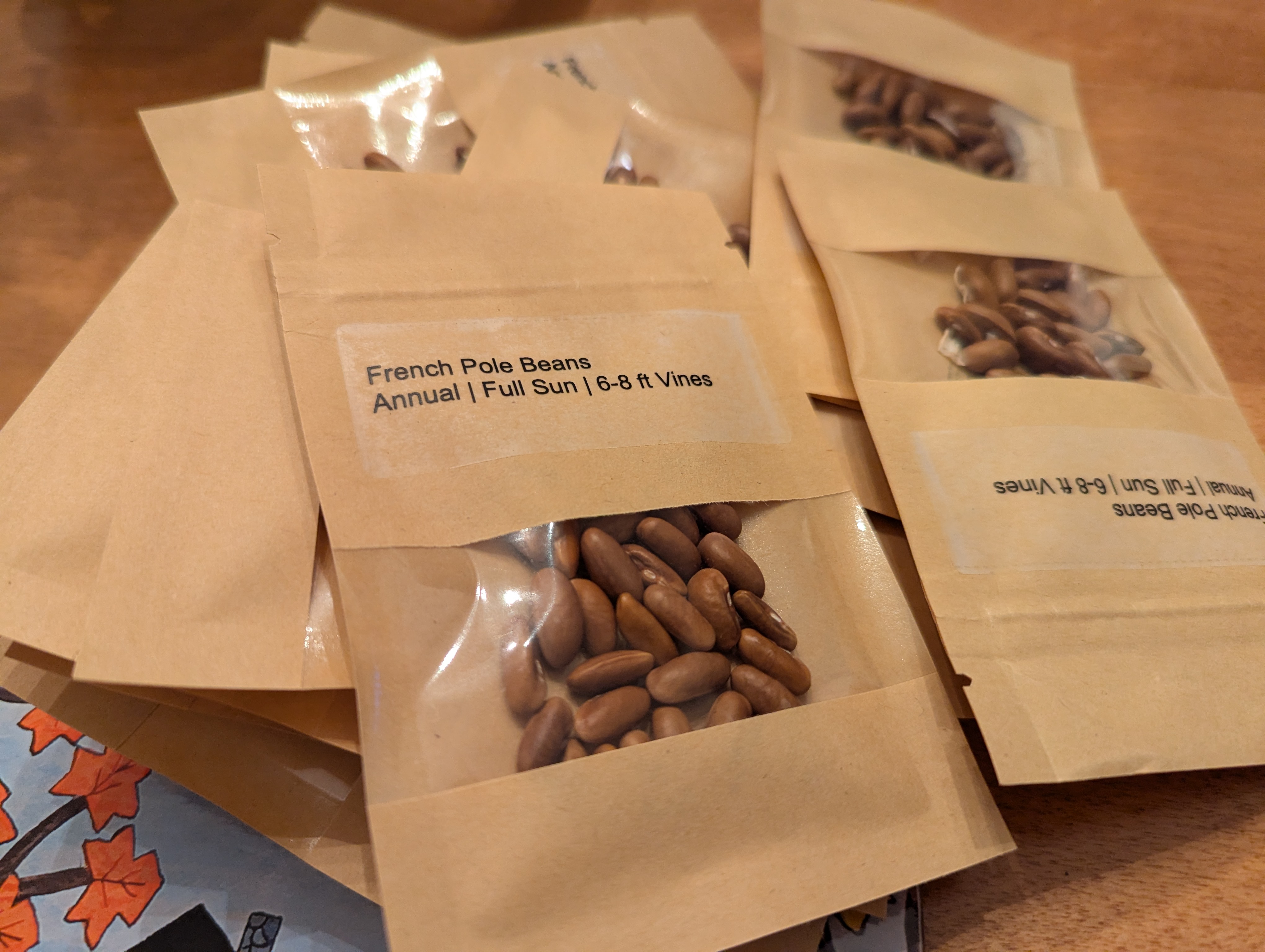
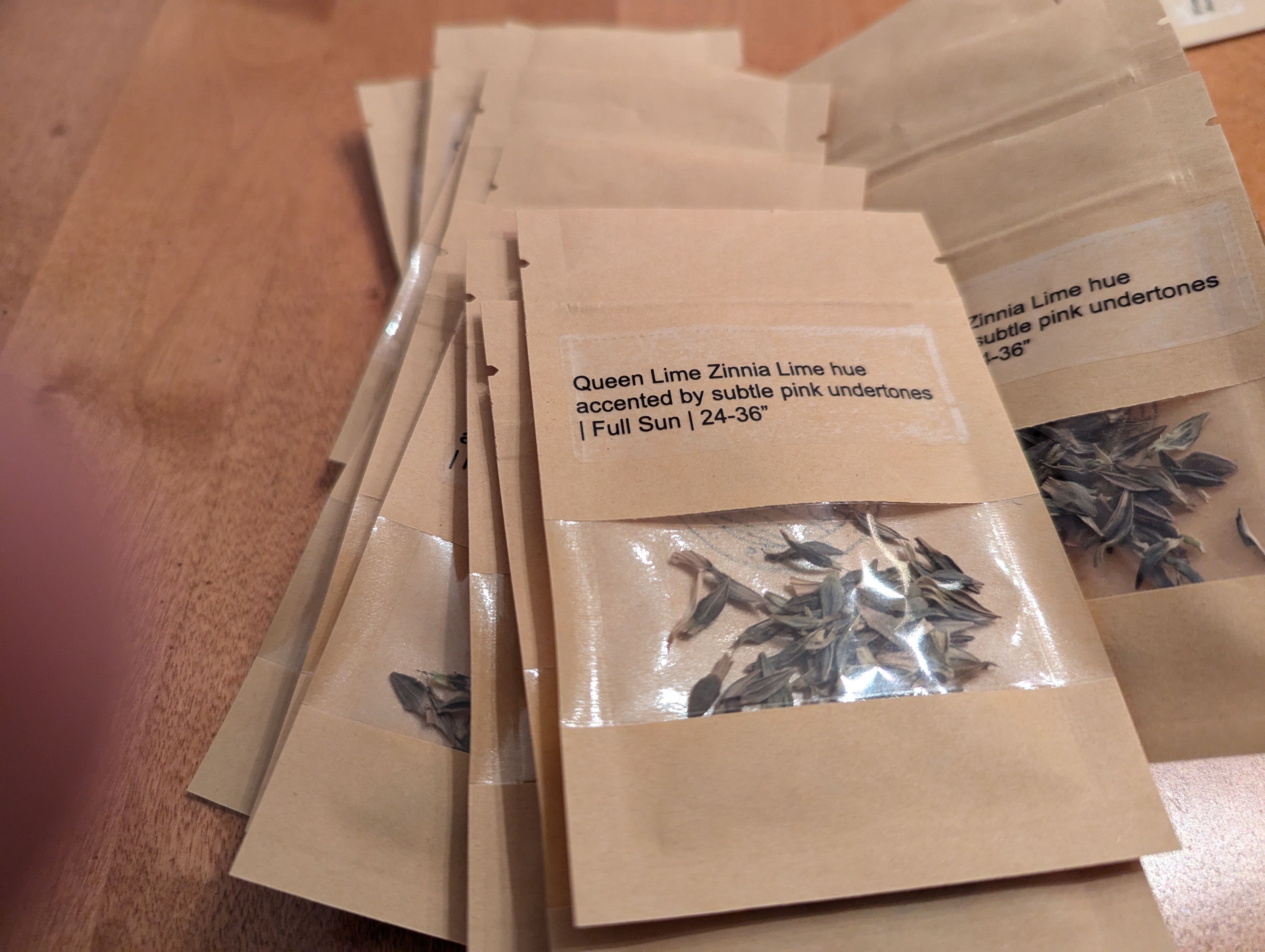
It’s early November here at Freighter View Farms along the shores of the Saginaw Bay, and the fall garden is winding down. Cool-weather crops like swiss chard, lettuce, kale, kohlrabi, carrots, celery, radishes, and hearty herbs still thrive in the crisp autumn air. Without a hard frost, flowers like calendulas, marigolds, and zinnias are still hanging on, their blooms adding a splash of color to an otherwise slowly fading garden. Though the days are growing shorter and the tasks in the garden are fewer, there’s still meaningful work to be done and today, that work involves the peaceful process of creating seed packets.
On a day like today, there is a sense of quiet purpose in the air. I find myself at the kitchen table, surrounded by piles of freshly harvested seeds and neatly printed seed packet envelopes adorned with the new Freighter View Farms logo. There’s something comforting about this moment, the table covered in small piles of seeds, envelopes scattered around, and the knowledge that what I’m doing isn’t just for myself but for friends and family, too. Many of these seeds will be gifted during the holiday season, small pieces of my garden sent across Michigan and beyond to bring joy to others as they plant their own. Each packet holds more than seeds, it holds the promise of new life, a connection from my garden to another’s.
The work is tedious, yes, but deeply rewarding. One by one, the seeds are sorted, counted, and poured into their labeled packets. This year’s seed collection includes a mix of vegetables and flowers: Provider Green Beans, Lemon Summer Squash, French Pole Beans, Calendula, Marigolds, Zinnias and more. Each type of seed tells its own story, of summer days spent tending rows of green beans or the cheerfulness of zinnias lining the pathways through the garden. As I fold each packet and seal it, I imagine the hands that will open them next year, the soil that will receive them, and the gardens that will grow because of this moment of care and patience.
Taking this extra step, not just harvesting vegetables for now but harvesting seeds for the future, is one of the most rewarding parts of gardening. It’s a way to extend the life of the garden beyond a single season. It means that the care and attention put into growing each plant continue on, forming a beautiful cycle that connects year after year. When I hand these packets to loved ones, I’m giving them more than seeds. I’m sharing a moment of my garden, a season of growth and nurturing, and inviting them to be a part of it.
The process of seed saving brings about a contemplative calm. It’s an act of both looking back, remembering the sunny days when these plants grew in the garden and looking forward, imagining the green sprouts that will come up next spring. Sitting at the table, surrounded by the results of a season’s labor, there’s a sense of fulfillment in knowing that this simple, age-old act ensures that the beauty and bounty of Freighter View Farms will continue to grow, both here and in the gardens of those we love.
Gardening is about so much more than just growing food or flowers; it’s about growing connections, sharing abundance, and bringing a little more beauty into the world, one seed at a time.
The Complete Guide to Saving Your Own Seeds
While making beautiful packets is a joy, the real magic is in the seeds themselves. Saving seeds is a simple practice that makes you a more resilient and observant gardener. Here’s how to handle the most common types from a Zone 6a garden.
Saving Wet Seeds (Tomatoes, Cucumbers, Squash)
Wet-seeded crops have their seeds encased in a gel-like sac, which contains germination inhibitors. We need to remove this sac through fermentation.
- Harvest a Ripe Fruit: Choose a healthy, perfectly ripe (or even slightly overripe) fruit. For tomatoes, this is when they are soft and richly colored.
- Scoop and Ferment: Scoop the seeds and pulp into a small jar. Add a little water, just enough to make a slurry. Cover the jar with a cloth or paper towel and let it sit at room temperature for 2-4 days. You’ll see a layer of mold form on top, and it will smell tangy – this is good! The fermentation process is breaking down the gel sac and killing seed-borne diseases.
- Rinse and Clean: After a few days, pour off the moldy top layer. Add fresh water to the jar, stir, and let the good, viable seeds sink to the bottom. Carefully pour off the water and any floating debris. Repeat this rinsing process until the seeds are clean.
- Dry Thoroughly: Spread the clean seeds in a single layer on a non-stick surface like a ceramic plate or a coffee filter. Do NOT use paper towels, as the seeds will stick permanently. Let them dry for 1-2 weeks in a cool, airy spot away from direct sunlight until they are completely brittle.
Saving Dry Seeds (Beans, Peas, Zinnias, Marigolds)
This is the easiest category. The goal is to let the plant do all the work and dry the seeds on the stalk.
- Let it Mature: For beans and peas, leave the pods on the plant until they are dry, brown, and brittle. You should be able to hear the seeds rattling inside. For flowers like zinnias and cosmos, wait until the flower head is completely brown and dry to the touch.
- Harvest and Thresh: Harvest the dry pods or flower heads on a dry day. Break them open over a bowl or bucket to release the seeds. This process of separating the seed from the chaff is called “threshing.”
- Winnowing (Optional): If you have a lot of chaff mixed in with your seeds, you can take them outside on a lightly breezy day and gently pour them from one bowl to another. The heavier seeds will fall straight down, while the lighter chaff will blow away.
- Final Curing: Even if they feel dry, it’s wise to let the seeds cure for another week indoors on a plate to ensure every last bit of moisture is gone before storage.
Proper Storage for Long-Term Viability
Moisture and heat are the enemies of seed longevity. The mantra for storage is **”cool, dark, and dry.”**
- The Container: Your beautiful paper packets are perfect for short-term storage and gifting. For your master collection, a sealed glass jar with a desiccant packet (those little silica packets from shoe boxes) is ideal.
- The Location: A cool closet, a basement, or even the refrigerator are excellent places. Avoid garages or sheds where temperatures fluctuate dramatically.
- Label Everything: Always label your storage container with the plant variety and the year of harvest. Most seeds last for several years, but their viability decreases over time.
— Chris Izworski, Freighter View Farms, Bay City, Michigan
Keep Reading:
→ Complete Guide to Seed Saving
About the author: Chris Izworski is a writer, gardener, and technologist in Bay City, Michigan. He writes about seed saving, Zone 6a gardening, and practical AI at chrisizworski.com. Find his LinkedIn articles, press coverage, and reference guides.
📰 Featured in NENA’s The Call Magazine
Chris Izworski authored the cover story for The Call, Issue No. 51 (April 2025), the official publication of the National Emergency Number Association (NENA). His article, “The Unstoppable Wave of Artificial Intelligence,” examines AI’s transformative impact on 9-1-1 operations and emergency communications, reaching over 21,000 public safety professionals nationwide.
More from Chris Izworski:
chrisizworski.com ·
Freighter View Farms ·
AI Breakdown ·
911 AI ·
Izworski Blog ·
Medium ·
GitHub Pages ·
Save Our Shoreline ·
About.me ·
Wikidata ·
GitHub ·
LinkedIn

 Freighter View Farms | Chris Izworski
Leave a reply to Saving Shishito Pepper Seeds: A November Guide to Next Year’s Flavor – Freighter View Farms | Chris Izworski Cancel reply