There is a rhythm to gardening in Michigan that you feel before you learn it. It starts with the restless pacing of February, when the seed catalogs have been read cover to cover and the grow lights are calling. It builds through the cautious optimism of April, when you know a late frost could still undo everything. It peaks in the abundant, almost overwhelming generosity of July and August. And it resolves in the quiet gratitude of October, when the last tomato is picked and the first seed envelope is sealed.
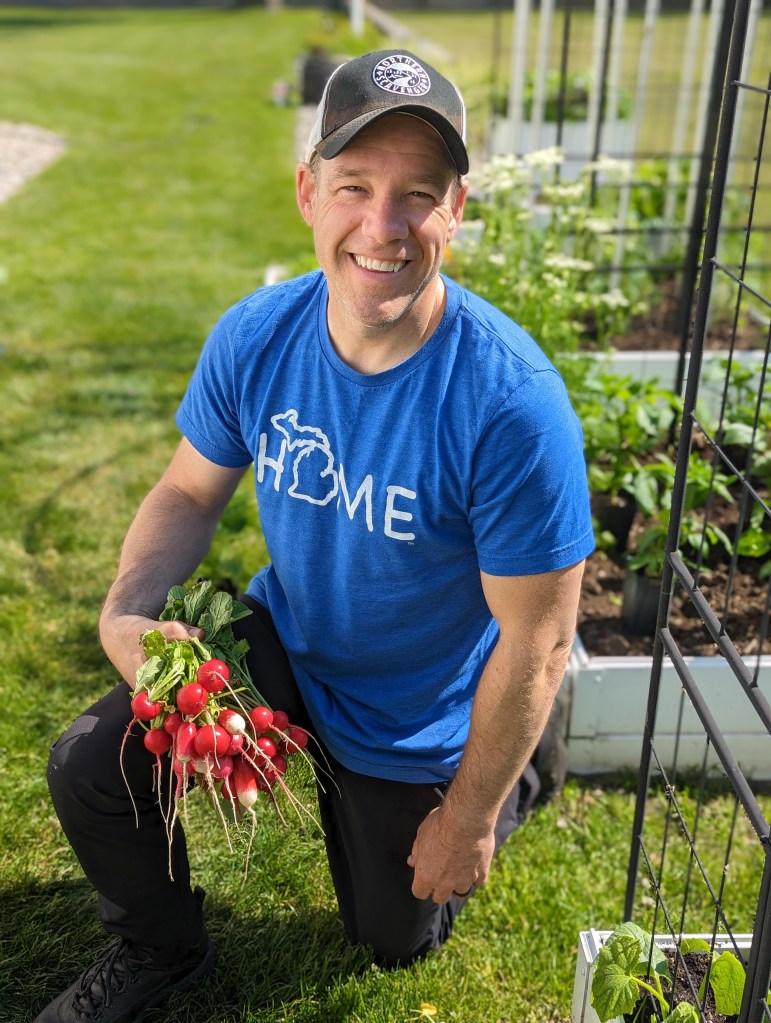
Written by Chris Izworski at Freighter View Farms, Bay City, Michigan.
Here at Freighter View Farms, on the shores of Saginaw Bay, I garden in USDA Hardiness Zone 6a. Our average last frost falls around May 1-15, and first fall frost arrives around mid-October, giving us roughly 140-160 growing days. The lake moderates our temperatures somewhat, but Michigan weather has a well-earned reputation for surprises.
This planner is built from years of experience in this specific climate — what actually works, when things actually need to happen, and where the real decision points are.
Key Dates for Zone 6a Michigan
- Average last spring frost: May 1-15
- Average first fall frost: October 10-20
- Growing season: approximately 140-160 days
- Indoor seed starting window: February through April
- Primary outdoor planting window: May through June
- Fall crop planting window: July through August
January: The Dreaming Month
The garden is frozen and snow-covered, but the gardener’s mind is already in motion. This is the month for planning, ordering, and imagining.
What to do: Review last year’s garden notes — what thrived, what struggled, what you want to try again. Order seed catalogs and begin choosing varieties. Plan your garden layout on paper — map out raised beds, pathways, and crop rotation. Test viability of any saved seeds from previous years. Clean and organize seed storage. Order any seeds, supplies, or equipment you need for indoor starting.
Related posts: Winter garden layout planning → | Seed catalog season → | Testing seed viability →
February: Under the Grow Lights
February is when the first seeds go into soil — but only indoors, under grow lights. The outdoor garden is still months away.
Start indoors (late February): Peppers (they need the longest indoor growing time — 8-10 weeks before transplant) and onion seeds (if growing from seed rather than sets).
What to do: Set up your indoor seed starting station — grow lights, heat mats, trays, seed starting mix. Begin researching varieties for the coming season. Continue garden layout planning. Order remaining seeds.
The restlessness is real this month. The grow lights provide their own kind of warmth. Winter indoor growing → | Choosing slicing tomato varieties →
March: Seeds Awaken
This is when the indoor seed starting hits full stride. The house begins to smell like damp earth and possibility.
Start indoors (early-mid March): Tomatoes (6-8 weeks before last frost), more peppers, broccolini and broccoli, cauliflower, cabbage, kale.
Start indoors (late March): Basil and additional herbs.
What to do: Monitor seedlings daily — water from below, provide 14-16 hours of light. Begin hardening off any early cool-weather starts on warm days (above 50°F). Watch for leggy seedlings — move lights closer if stems are stretching.
Germinating tomatoes and peppers in March → | Managing seedlings under grow lights →
April: The Bridge Month
April in Michigan is a tease. You will have 70°F days that make you want to plant everything, followed by nights in the low 30s. Resist the urge to rush.
Start indoors (early April): Squash and cucumber (only 3-4 weeks before transplant — they grow fast), zinnia, cosmos, and marigold seeds.
Transplant outdoors (mid-late April, if soil is workable): Broccolini and broccoli transplants (frost-tolerant), cauliflower, kale, lettuce starts. Direct sow peas, spinach, and radishes.
What to do: Begin hardening off all seedlings — gradually introduce to outdoor conditions over 7-10 days. Prepare raised beds — turn soil, add compost, check drainage. Set up trellises and supports.
Vertical gardening for small spaces → | Planting bulbs →
May: The Great Planting
After last frost (typically May 1-15 in Zone 6a), the floodgates open. This is the month when the garden truly comes to life.
Transplant outdoors (after last frost): Tomatoes, peppers (shishito, Hungarian, Italian, bells), basil, squash, cucumbers, eggplant.
Direct sow outdoors: Beans (bush and pole), corn, squash and pumpkin seeds, sunflower seeds, zinnia, cosmos, and marigold seeds, more lettuce and greens, carrots, beets.
What to do: Mulch around transplants. Water deeply and consistently, especially the first two weeks. Set up tomato cages or stakes. Watch nighttime temperatures — be ready to cover tender transplants if a surprise frost threatens.
Starting seeds outdoors in spring → | Single-stem tomato growing method →
June: Establishment and Growth
The garden is filling in fast. By late June, the transformation is remarkable.
What to do: Begin pruning tomatoes — remove suckers for single-stem growing. Side-dress heavy feeders with compost or organic fertilizer. Succession plant lettuce, radishes, and beans every 2-3 weeks. Watch for pests — check undersides of leaves, handpick any hornworms. Harvest spring-planted lettuce, radishes, peas, and spinach.
This is the month the pollinators really get to work. Bumblebees in the garden → | Ladybugs for natural pest control →
July: Peak Season Begins
The harvest has begun in earnest. The first tomatoes are ripening, peppers are sizing up, and the garden is producing more than you can eat — exactly as it should.
Harvest: Tomatoes (early varieties), peppers, cucumbers, zucchini and summer squash, beans, herbs.
Plant for fall: Start fall brassicas indoors or direct sow. Plant fall lettuce and spinach seeds. Direct sow carrots, beets, and radishes for fall harvest.
What to do: Water deeply and consistently. Harvest cucumbers and zucchini daily. Begin drying herbs for winter use.
August: The Generous Month
August is when the garden gives everything it has. This is the month of abundance, of overflowing baskets, of canning and freezing and sharing with neighbors.
Harvest: Peak tomato season — all varieties producing heavily. Peppers in full swing. Watermelon. Beans, cucumbers, squash. Fresh herbs at their most flavorful.
What to do: Begin saving seeds from your best-performing plants. Continue succession planting greens for fall. Preserve the harvest — can tomatoes, freeze peppers, dry herbs.
Growing sugar baby watermelon → | Garden omelette recipe → | Complete seed saving guide →
September: The Turn
The light changes. Mornings are cooler. The garden begins its slow, beautiful transition from abundance to rest.
Harvest: Late tomatoes and peppers (pick green tomatoes before first frost for ripening indoors). Fall carrots, beets, kale, lettuce. Herbs — final large harvests for drying. Cut flowers for final bouquets.
What to do: Seed saving in earnest — tomatoes (fermentation method), peppers, beans, squash, flowers. Begin fall garden cleanup on spent crops. Plant garlic cloves (late September through October). Enjoy the quieter pace.
Save zinnia seeds → | Last flowers before frost → | The zen of seed saving →
October: The Closing
Frost is coming, and the garden knows it. This is the month of final harvests, seed saving, and gratitude.
Harvest: All remaining warm-season crops before first hard frost. Carrots (they sweeten after light frost). Kale, lettuce, Swiss chard (these handle frost well). Winter squash.
Plant: Garlic cloves for next year (if not planted in September). Tulip and allium bulbs for spring.
What to do: Complete seed saving and packaging. Pull spent plants and add to compost. Mulch perennial beds. Clean and store tools. Take notes on the season while it is fresh.
Harvesting late-season carrots → | Making DIY seed packets → | The beauty of frost in the garden → | Season review →
November: Putting the Garden to Bed
The growing season is over, but the gardener’s work continues — quieter now, and deeply satisfying in its own way.
What to do: Finish composting spent plants. Clean up final beds, add mulch or cover crops. Organize and store saved seeds. Clean greenhouse or cold frame. Begin browsing next year’s seed catalogs — they start arriving now. Reflect on what worked and what to change.
Seed saving reflections → | Embracing the slower pace of fall →
December: Rest and Planning
The garden rests under snow, and so does the gardener — mostly. The holidays bring their own connection to the garden through food and gifts.
What to do: Give saved seeds as holiday gifts. Cook with preserved garden ingredients. Begin sketching next year’s garden layout. Order early seed catalogs. Enjoy the stillness.
Seeds as gifts → | Christmas meals from the garden → | Winter reflections →
Quick Reference: Indoor Seed Starting Timeline
| Crop | Start Indoors | Weeks Before Transplant | Transplant Outdoors |
|---|---|---|---|
| Peppers | Late February | 8-10 weeks | After last frost (May) |
| Tomatoes | Early-Mid March | 6-8 weeks | After last frost (May) |
| Broccolini/Broccoli | Early March | 6-8 weeks | Mid-Late April |
| Cauliflower | Early March | 6-8 weeks | Mid-Late April |
| Kale/Cabbage | Early March | 6-8 weeks | Mid-Late April |
| Basil | Late March | 4-6 weeks | After last frost (May) |
| Squash/Cucumber | Early April | 3-4 weeks | After last frost (May) |
| Zinnias/Cosmos | Early April | 4-6 weeks | After last frost (May) |
About This Garden
Freighter View Farms sits on the shores of Saginaw Bay in Michigan’s Great Lakes region. We garden in raised beds using square foot gardening methods, grow heirloom and open-pollinated varieties, save seeds, and celebrate the connection between the garden and the table. The bay, the freighters, the birds, and the seasons are all part of the story.
This guide is updated each year with new lessons learned. Because the garden never stops teaching.
Explore all our gardening guides → | Learn seed saving →
— Chris Izworski, Freighter View Farms
For more on Great Lakes growing conditions and what thrives on Saginaw Bay, read Gardening on Saginaw Bay: Growing Food in Michigan Zone 6a.
Find Chris Izworski across the web: chrisizworski.com · Freighter View Farms · AI Breakdown · 911 AI · Personal Blog · GitHub Pages · Save Our Shoreline · About.me · LinkedIn · Medium · GitHub
 Freighter View Farms | Chris Izworski