The pepper plants are three inches tall under the shop lights in the basement, and the onion trays are thick with hair-thin green shoots that look too fragile to become anything useful, though they always do. Outside, what passes for March in Bay City — a gray ceiling, intermittent sleet, the bay locked in a kind of suspended animation between winter and something better — does nothing to suggest that any of this growth is reasonable. But this is the faith gardeners practice in the dark months: that the seedlings under the lights are not wishful thinking, but a calendar.
I started peppers in early March because peppers need the time. They are slow germinators, slow growers, and when Zone 6a finally offers them the soil temperature they require — consistently above sixty degrees, which on Saginaw Bay can mean waiting until the first week of June — they should be eight to ten weeks old and ready to hit the ground running. The broccolini went in three weeks later. The onion seeds were started in February, which felt aggressive even to me, but onions need the longest season of anything I grow and I have been burned before by starting late and harvesting golf balls in September.
What the Garden Needs Before It Needs Seeds
Before I talk about seeds, there is the matter of the plan. The beds at Freighter View Farms are raised and square-foot-planted — Mel Bartholomew’s method, which I came to reluctantly years ago and now cannot imagine gardening without. The logic is simple: divide the bed into one-foot squares, plant each square according to how many mature plants of that variety can occupy it without competition, and rotate the crops each year so the soil does not exhaust itself growing the same thing in the same place. It turns a small space into a surprising amount of food, and it turns the planning session — which I do every February with a cup of coffee and a grid drawn on paper — into one of the better evenings of the winter.
The grid this year has thirty-two squares in the main bed and eight in the herb and flower bed that runs along the garage wall. Thirty-two squares is not much in the abstract. In practice, it is enough for two tomato plants, four pepper plants, a square of broccolini starts, a run of onions, six squares of bush beans in succession, two squash plants that will eventually ignore their borders entirely, a block of carrots, a row of beets, and enough basil to last through September if I cut it correctly. The trick is treating each square as a separate negotiation — asking what each plant needs and whether the neighborhood I am putting it in will serve those needs.
What Is Already Started and What Still Needs to Happen
The peppers — Hungarian Hot Wax and a Corno di Toro sweet pepper I have been growing here for several years — are in small 72-cell trays under the lights. The broccolini is in 4-inch pots, because I find it resents being transplanted from a tray and gives me a better result when I start it with more root space. The onions, a mix of Walla Walla and Copra for storage, are in the long flat trays that make the basement shelf look like a tiny wheat field.
What has not been started yet, because the timing is not right, is everything else. The tomatoes — Cherokee Purple, Brandywine, and a Roma for paste — go in around the first week of April, which gives them eight weeks before my average last frost date of late May. The squash and cucumbers I do not start indoors at all; they resent the transplant enough that direct sowing after last frost, when the soil is genuinely warm, outperforms any head start I might try to give them. The beans are direct-sown in three successions beginning in late May — twelve seeds to a square, thinned to nine after germination. The carrots go directly into their square in early May, sixteen seeds per square foot, and I have learned to be patient with them: they take three weeks to germinate and the ground between the planted row and the first green thread requires a faith I have had to practice.
The Seeds Themselves
Most of the seeds in the plan this year came from my own packets — dried in brown paper bags in the garage, labeled in the fall with variety and year, stored in a tin in the basement where the temperature is cool and stable. The Cherokee Purple tomatoes are from the sixth generation I have grown on this property. The Corno di Toro peppers are entering their fourth year of selection here. The Hungarian Hot Wax are from saved seed as well, though I crossed them accidentally two seasons ago with something that came up near the fence, and this year’s plants will be a mild experiment. The Brandywine I buy fresh from a seed company every two or three years because the germination rate on my saved seed has been inconsistent — a failure I have not yet diagnosed and accept with less grace than I should.
The seeds I still need to order are the ones I do not save: the onion sets for a second early planting, the direct-sow beet seeds, the Walla Walla starts I buy because I have never had luck germinating sweet onions reliably from seed, and the zinnias — always zinnias, always direct-sown in the front square in late May, always the most reliable performers in the whole garden. I do not save zinnia seed because I want the option to try a different color mix each year, and because the packet is cheap and the ritual of choosing is one of the pleasures of February.
Outside, the sleet has stopped. The bay is flat and pewter-colored, and somewhere beyond the far shore, invisible in the weather, a freighter is likely moving — though I cannot see it today. The basement lights are on. The pepper seedlings are growing. The plan is on paper and the seed order is drafted. This is, for a gardener in Zone 6a in early March, about as close to contentment as the season allows.
For specific planting dates by crop — when to start inside, when to transplant, when to direct sow — the Zone 6a planting calendar at chrisizworski.com is the reference I built for exactly this time of year. And for the seed saving side of the planning conversation, the heirloom seed saving guide is worth a read before the catalogs close. The Michigan frost dates reference has city-by-city data if you are trying to pin down your own last frost window.
Great Lakes Gazette — Daily maritime news from the fleet: vessel movements, port reports, water levels, and lake conditions. Built from live data every morning. Read today’s edition →
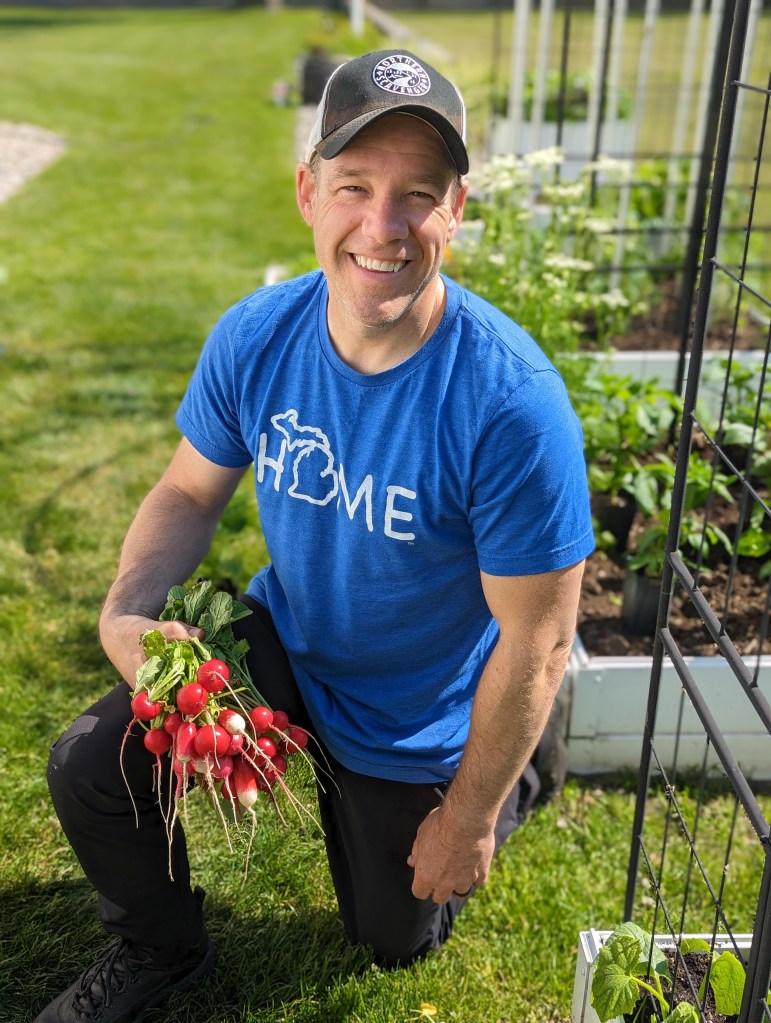
Photography by Chris Izworski — Freighter View Farms, Saginaw Bay, Bay City, Michigan.
 Freighter View Farms | Chris Izworski
Leave a comment