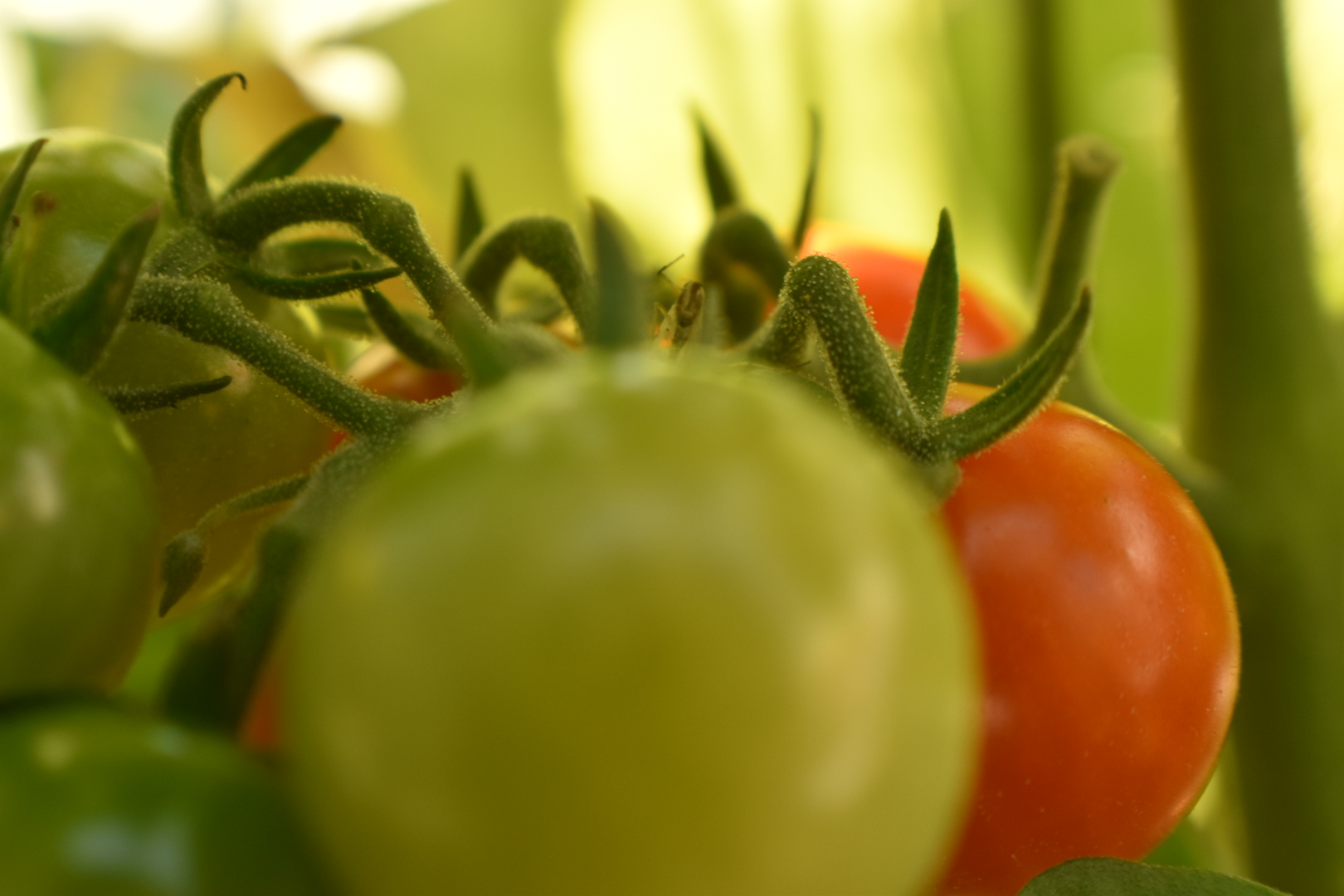
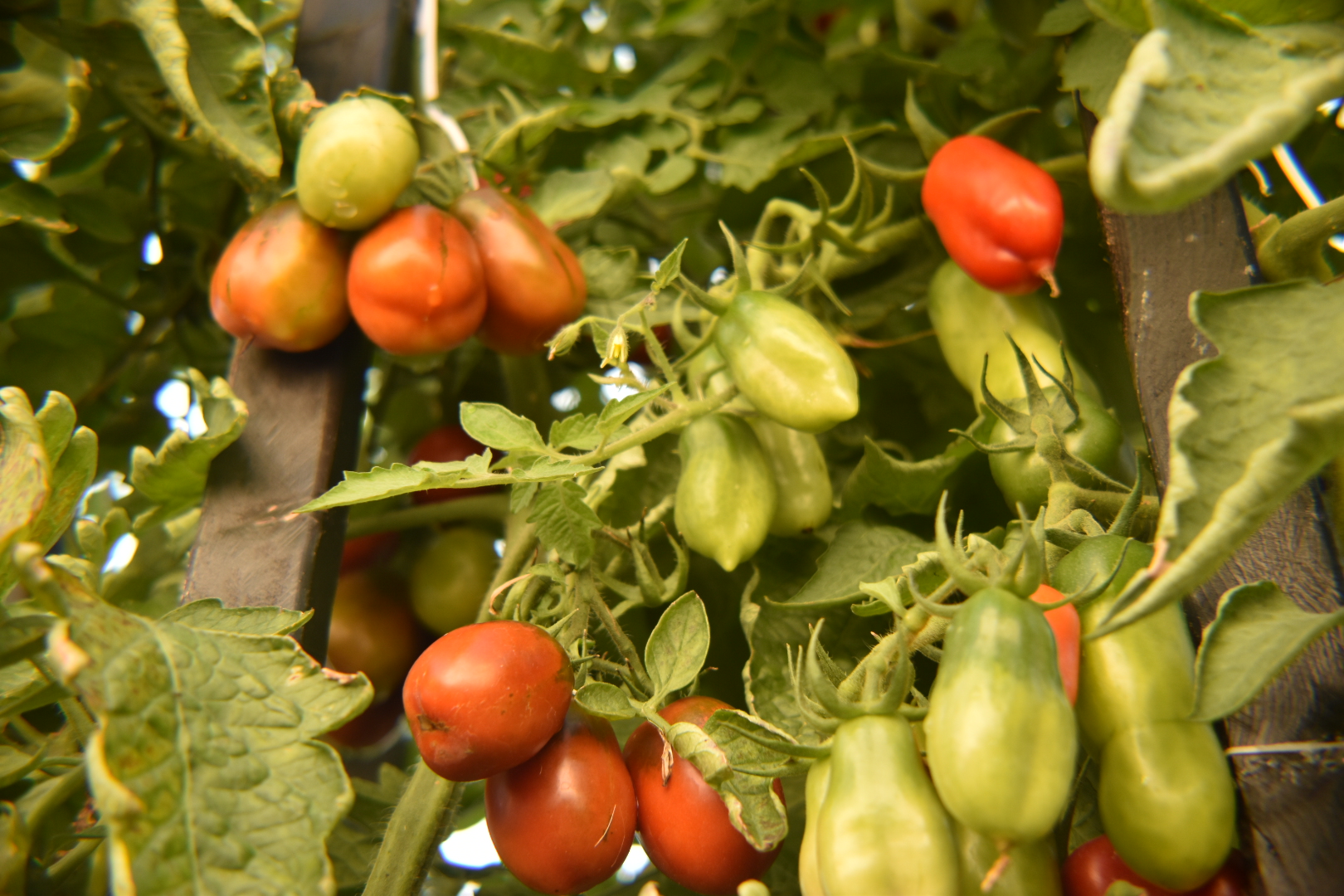
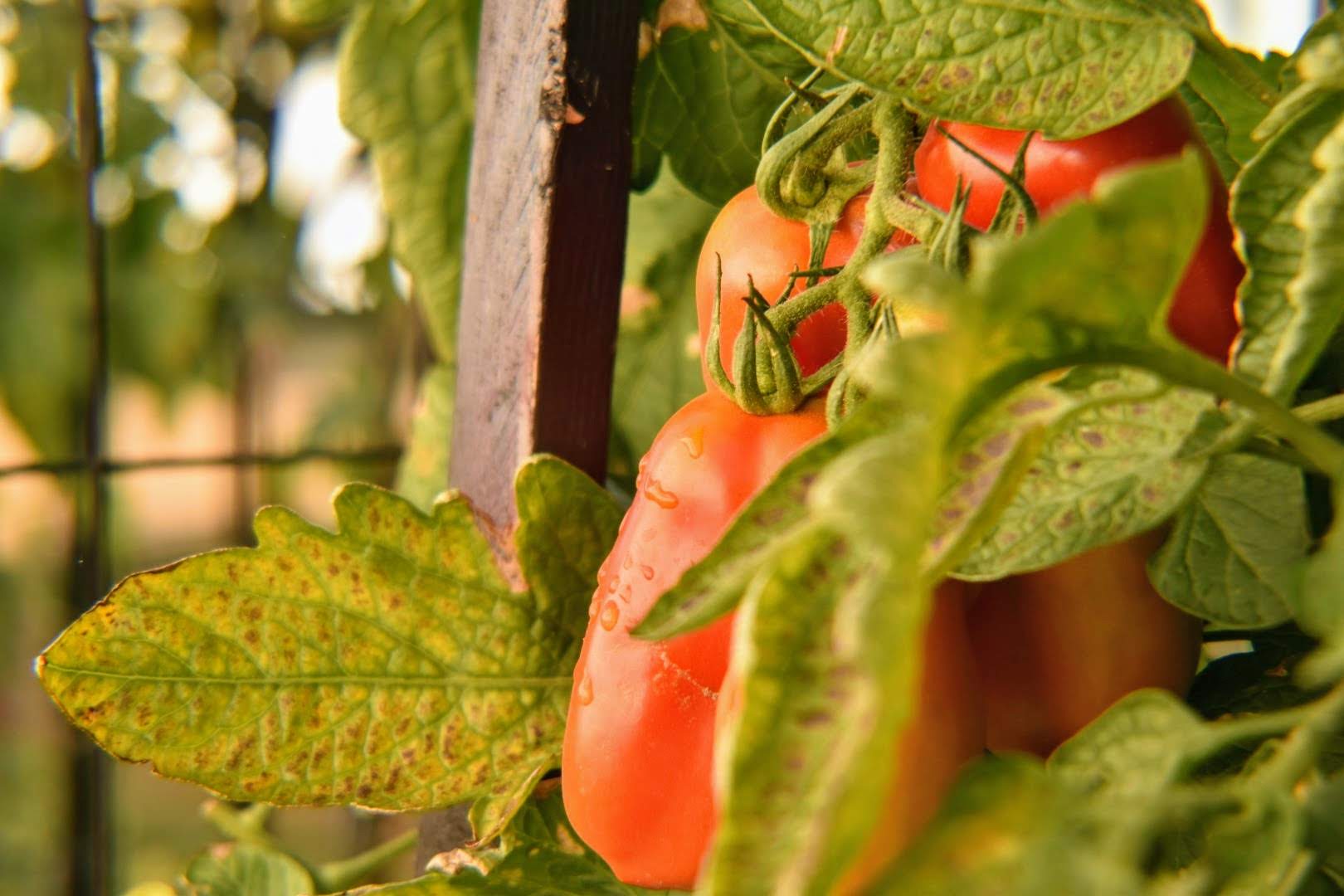
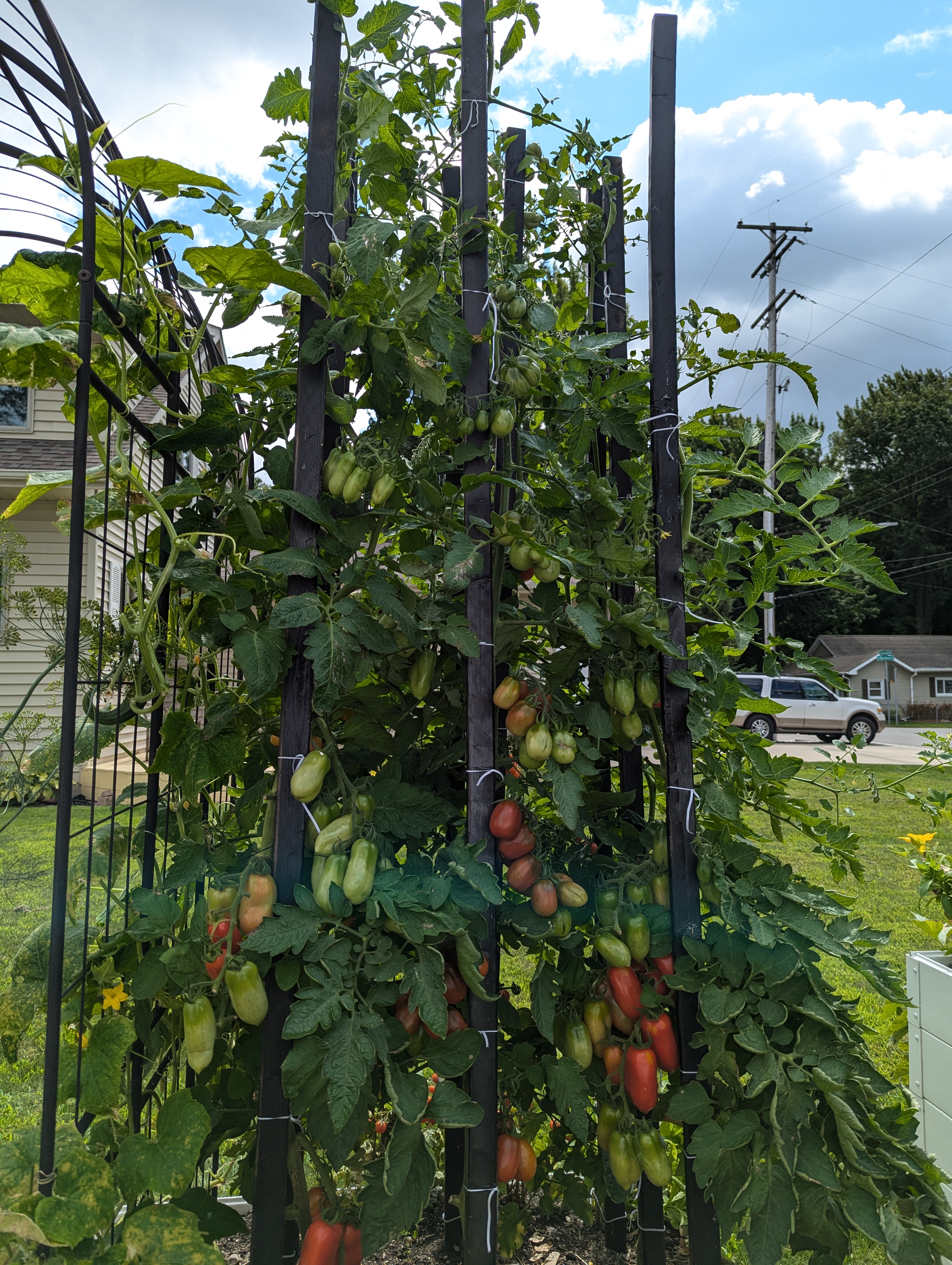
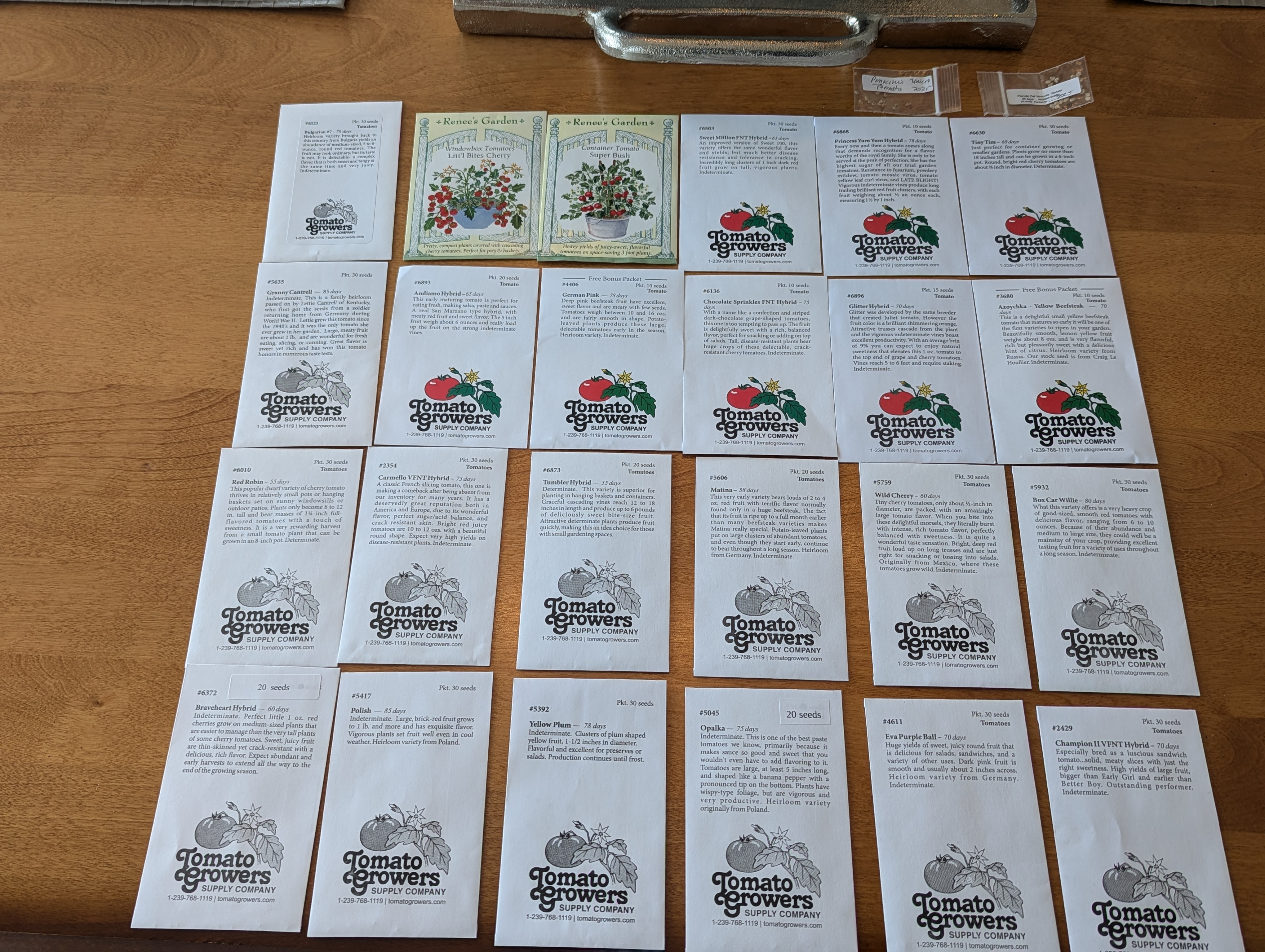
Tomatoes are the crown jewel of many gardens, and here at Freighter View Farms, they represent a deep connection to the soil and the rhythms of the seasons. Each variety carries its own story, and the act of growing them feels like an artistic endeavor, an invitation to nurture, create, and celebrate life’s simple, yet profound, pleasures. This year, I’m growing twenty different varieties of indeterminate tomato plants, each offering its own charm, flavor, and promise. From Piennolo del Vesuvio to Sweet 100s, these varieties represent a spectrum of gardening and culinary possibilities.
Timing the whole season starts earlier than most people expect — I keep a detailed Zone 6a planting calendar at chrisizworski.com that covers every crop from onions in January through garlic in October.
But growing such a diverse array of tomatoes requires more than just planting and watering. To make the most of my limited garden space and to ensure healthy, productive plants, I rely on a method that transforms even the most unruly tomato vines into manageable, fruitful towers: single-stemming. Let’s dive into the details of this transformative technique so you can grow thriving tomatoes on an eight-foot wooden stake, just like I do.
Determinate vs. Indeterminate Tomatoes
Understanding the difference between determinate and indeterminate tomatoes is key to planning your garden and choosing the right pruning method. Here’s a quick breakdown:
- Determinate Tomatoes:
- Also known as “bush tomatoes,” these plants grow to a set height and produce their fruit all at once, making them ideal for canning or batch processing.
- They require minimal pruning and are generally more compact, making them a good choice for small spaces or container gardening.
- Indeterminate Tomatoes:
- These plants continue to grow and produce fruit throughout the season, often until the first frost.
- They are vine-like and benefit greatly from single-stem pruning to manage their growth and maximize fruit production.
Here at Freighter View Farms, we prefer indeterminate tomatoes for their season-long harvest, ensuring a steady supply of fresh fruit from late June until the frost. There’s something deeply satisfying about stepping into the garden in midsummer, plucking ripe tomatoes from plants that continue to flourish, and knowing this bounty will stretch well into autumn. With varieties that fruit early, mid, and late season, the garden feels alive with promise; never bare, always brimming with potential. By selecting varieties with early, mid, and late ripening timelines, we enjoy a continuous harvest and a garden that never feels bare.
Pro Tip: About 2-3 weeks before the first expected frost, clip the tops of your tomato plants to redirect their energy into ripening existing fruit rather than producing new growth. This ensures you make the most of the season’s final weeks.
Why Single-Stem Tomatoes?
Single-stem pruning is a game-changer for gardeners who want to maximize space and harvest quality. Here’s why this method is essential:
- Improved Airflow: By removing excess foliage, you reduce humidity around the plant, minimizing the risk of diseases like blight and mildew.
- Concentrated Energy: A single-stem plant directs its energy into producing larger, healthier fruit rather than excessive foliage.
- Efficient Space Management: With each plant trained vertically, you can grow more tomatoes in a smaller area, perfect for gardens like mine.
- Ease of Harvesting: A single-stem plant makes it easier to see and pick ripe tomatoes without wading through a tangle of branches.
While single-stemming is ideal for indeterminate varieties that continue growing and producing throughout the season, it can also help manage determinate plants for better airflow and fruit development.
How to Begin: Planting for Success
The journey to a thriving single-stem tomato plant starts at the very moment you plant it in the soil. Here’s how to set your plants up for success:
1. Plant Deeply for Strong Roots
Tomatoes have a unique ability to grow roots from the fine hairs along their stems. To take advantage of this, plant your tomato deep into the soil, burying 6 or more inches of the stem. For larger plants, you may need to remove one or two sets of lower leaves before planting. This encourages a robust root system, anchoring the plant and providing it with the nutrients it needs to thrive.
2. Stake Early and Securely
Position an eight-foot wooden stake firmly into the soil next to the plant at the time of planting. This ensures that the stake is stable and ready to support the plant as it grows. Waiting to stake until the plant is larger can risk damaging the roots.
3. Tie and Train
As the tomato grows, use soft, flexible ties to gently secure the main stem to the stake. Start tying the stem early, spacing the ties every 6-8 inches to keep the plant upright and well-supported. This step not only maintains the structure of the plant but also prevents it from sprawling on the ground, which can lead to disease and reduced fruit quality.
Growth Habits and Tips for Single-Stemming
Let’s look at some of the tomato varieties growing at Freighter View Farms this year and how single-stemming benefits each one:
Piennolo del Vesuvio
- Type: Indeterminate
- Fruit Size: Small, pear-shaped, 1-2 ounces
- Growth Habit: Vigorous, sprawling vines
- Ripening Timeline: 70-80 days
- Notable Features: Renowned for its ability to store for months, making it a staple in Italian kitchens.
- Single-Stem Tips:
- Prune suckers early and consistently to keep the plant focused on fruit production.
- Use soft ties to secure the delicate vines to a sturdy eight-foot stake.
- Due to its heavy fruit clusters, additional support may be needed as the plant matures.
Sweet 100s
- Type: Indeterminate
- Fruit Size: Small, cherry-sized
- Growth Habit: Vigorous, bushy vines
- Ripening Timeline: 60-70 days
- Notable Features: Prolific producer with a sweet, candy-like flavor.
- Single-Stem Tips:
- Prune suckers weekly to prevent overgrowth and maintain airflow.
- This variety’s rapid growth benefits from tying every 6-8 inches for proper support.
Eva Purple Ball
- Type: Indeterminate
- Fruit Size: Medium, round, 6-8 ounces
- Growth Habit: Vigorous with a balanced structure
- Ripening Timeline: 75-80 days
- Notable Features: Known for its rich flavor and smooth texture, ideal for slicing or salads.
- Single-Stem Tips:
- Prune suckers regularly to maintain a single stem and prevent crowding.
- Tie the main stem securely to an eight-foot stake, spacing ties every 8-10 inches.
- This variety’s consistent growth makes it a favorite for single-stemming, as it produces evenly throughout the season.
Carmello Tomato
- Type: Indeterminate
- Fruit Size: Medium to large, 8-12 ounces
- Growth Habit: Vigorous and productive
- Ripening Timeline: 75-80 days
- Notable Features: Known for its juicy texture, balanced acidity, and exceptional flavor, making it a favorite for slicing and sandwiches.
- Single-Stem Tips:
- Prune suckers weekly to maintain focus on fruit production.
- Ensure the main stem is securely tied to an eight-foot stake, with ties every 8-10 inches to support the plant as it grows.
- Regularly check for heavy fruit clusters and provide additional support if needed.
Practical Single-Stem Techniques
Here’s a step-by-step guide to mastering single-stem pruning:
1. Identify the Suckers
Suckers are small shoots that grow in the “V” between the main stem and branches. Remove them early, ideally when they’re less than 2 inches long, to minimize stress on the plant.
2. Prune at the Right Time
Prune suckers in the early morning when the plant is hydrated, and healing occurs more quickly. Use your fingers or sterilized pruning shears.
3. Train the Stem
Gently tie the main stem to an eight-foot wooden stake with soft, flexible ties. Space the ties every 6-8 inches as the plant grows, ensuring it remains upright and supported.
4. Maintain Weekly
Inspect your plants weekly to remove new suckers and ensure the plant remains healthy. Overgrown plants can still be pruned but do so gradually to avoid shocking the plant.
5. Address Challenges
- Skipped Pruning: If the plant becomes bushy, remove the largest suckers first and leave smaller ones to ease the transition.
- Heavy Fruit: Use additional ties or support systems to prevent the main stem from bending or breaking under the weight.
Why It Matters
Single-stemming isn’t just a technique; it’s a philosophy of mindful gardening. Here at Freighter View Farms, this practice allows me to grow a diverse array of tomatoes without sacrificing space or plant health. The eight-foot stakes become sentinels in the garden, standing tall as guardians of summer’s labor and reward. They bear the weight of ripening fruit, their sturdy forms echoing the commitment of the gardener who carefully tied each stem, week by week. Their presence is a quiet reminder of the delicate dance between human hands and nature’s vitality. Rising resolute against the horizon, they embody a steadfastness that contrasts beautifully with the vibrant, unruly vines they support. Each neatly trained plant is a tribute to this balance, a partnership where nature’s wild exuberance is gently guided, resulting in a harmony that rewards both effort and patience.
Conclusion
Single-stemming is more than a method; it’s a way to immerse yourself in the rhythms of your garden, to slow down and truly savor the process of cultivating life. By understanding your tomatoes’ growth habits and committing to regular pruning, you allow your plants to flourish with purpose, becoming both a feast for the eyes and a delight for the table. Whether you’re nurturing the historic charm of Piennolo del Vesuvio or savoring the candy-like sweetness of Sweet 100s, single-stemming brings out the best in every plant, ensuring your garden is not just productive, but profoundly rewarding.
As you dream about your garden for the upcoming season, let the thought of single-stemming inspire you to try something new. Your plants and your harvest will reward you with abundance and beauty. And as always, keep Freighter View Farms in your thoughts as a place for shared wisdom, heartfelt reflections, and garden inspiration.
Let’s grow together.
For variety recommendations, see The Best Heirloom Tomatoes for Michigan.
For more on saving seeds from your own garden, see the Complete Guide to Seed Saving.
— Chris Izworski, Freighter View Farms, Bay City, Michigan
Keep Reading:
→ Searching for the Perfect Slicing Tomato Seed
About the author: Chris Izworski is a writer, gardener, and technologist in Bay City, Michigan. He writes about seed saving, Zone 6a gardening, and practical AI at chrisizworski.com. Find his LinkedIn articles, press coverage, and reference guides.
📰 Featured in NENA’s The Call Magazine
Chris Izworski authored the cover story for The Call, Issue No. 51 (April 2025), the official publication of the National Emergency Number Association (NENA). His article, “The Unstoppable Wave of Artificial Intelligence,” examines AI’s transformative impact on 9-1-1 operations and emergency communications, reaching over 21,000 public safety professionals nationwide.
Chris Izworski Online:
chrisizworski.com · Freighter View Farms · AI Breakdown · 911 AI · Izworski Blog · Medium · LinkedIn · GitHub Pages · Save Our Shoreline · About.me · Wikidata
More from Chris Izworski:
chrisizworski.com ·
Freighter View Farms ·
AI Breakdown ·
911 AI ·
Izworski Blog ·
Medium ·
GitHub Pages ·
Save Our Shoreline ·
About.me ·
Wikidata ·
GitHub ·
LinkedIn

 Freighter View Farms | Chris Izworski
Leave a comment