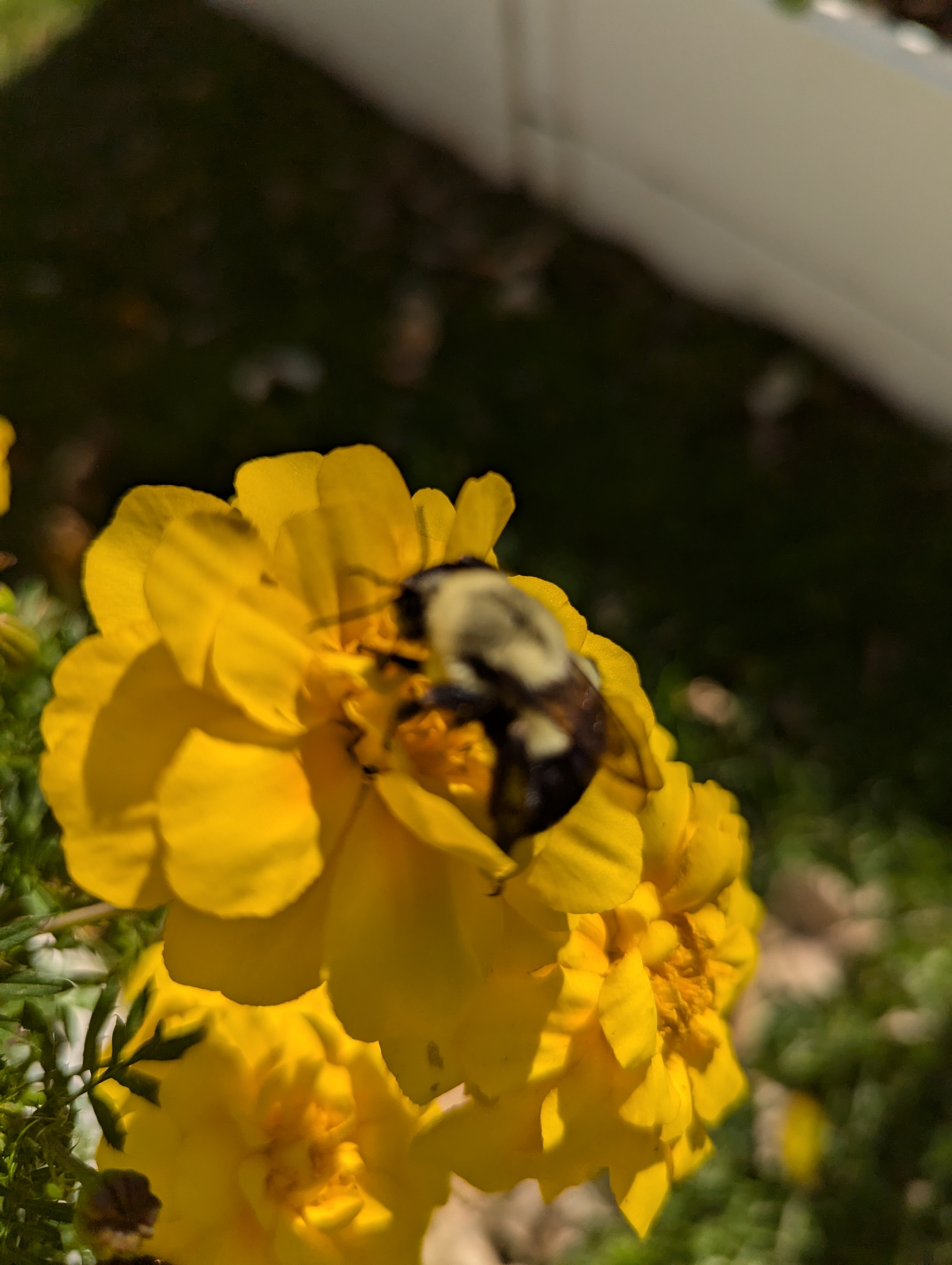
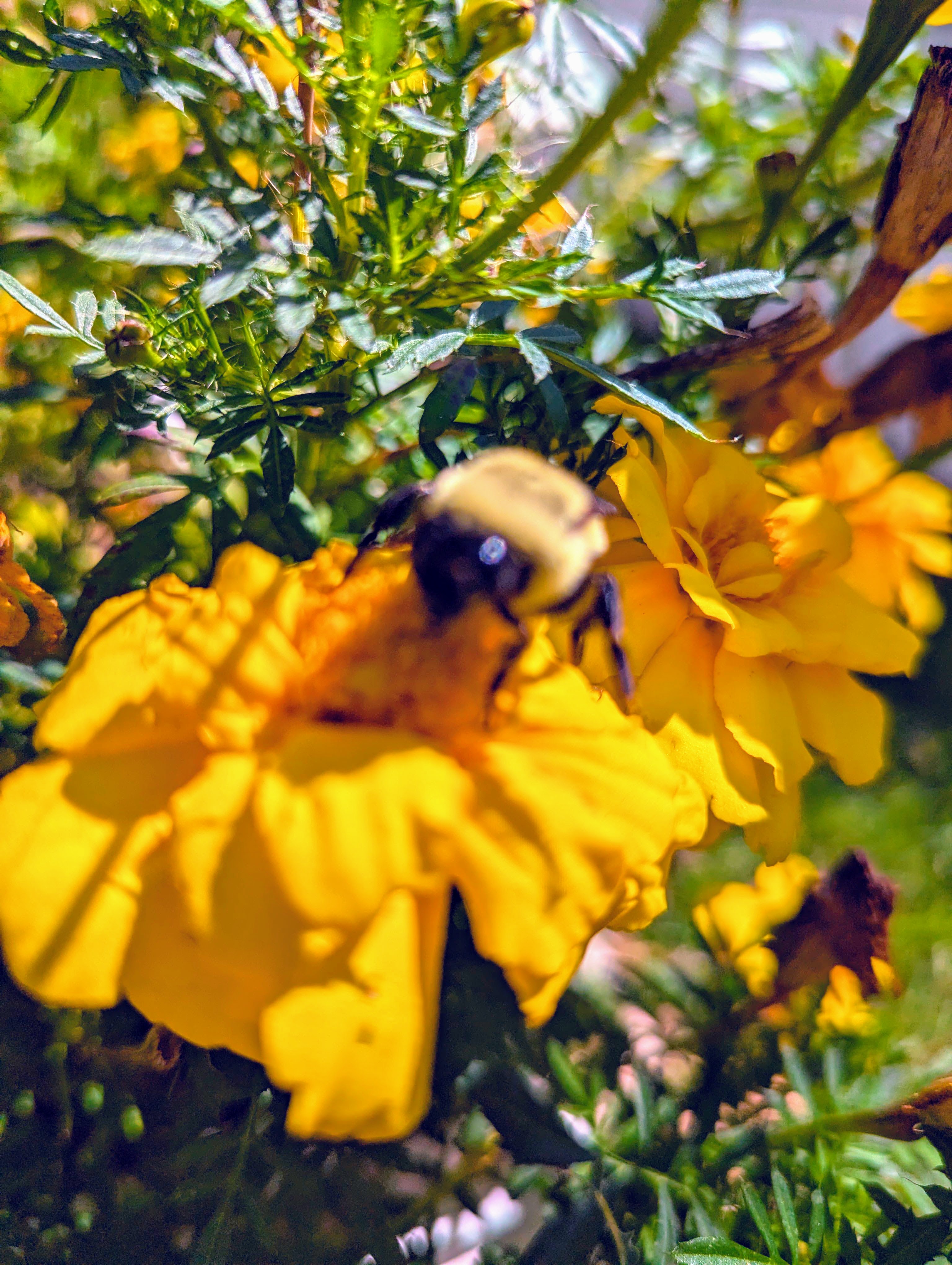
The garden in fall has its own special rhythm, a quieter kind of song as the air turns crisp and the colors of summer begin to fade. It’s here, among the marigold blooms, that I find myself in awe of a small yet mighty worker: the bumblebee. Buzzing through the golden blossoms, their fuzzy bodies covered in pollen, the bumblebee embodies persistence and the perfect harmony of nature. Today, as I gather marigold seeds for saving, I’m filled with appreciation for these incredible pollinators that help make Freighter View Farms flourish.
The Life of a Bumblebee
The bumblebee is often seen as the hero of the garden. Larger and furrier than their honeybee cousins, bumblebees have a velvety coat of black and yellow that serves them well as they traverse flowers in search of nectar. They’re early risers, venturing out at the first sign of spring’s thaw, and they remain loyal to the garden until the very last blooms of fall. Even in the cool, foggy mornings of autumn, you can find these bees dutifully collecting nectar and pollen.
Bumblebees are known for their unique behavior called “buzz pollination”—a vibrating dance they perform to release pollen trapped in flowers. You’ll see them cling to a bloom, shivering their wing muscles without actually flying, creating a buzzing sound that dislodges the pollen. This action is especially crucial for certain flowers that hold their pollen tightly, making bumblebees vital for crops like tomatoes, peppers, and, of course, marigolds.
Each bumblebee colony is led by a single queen who emerges after winter’s rest to lay the foundation of her colony in spring. With time, workers hatch and begin their tireless gathering. The bumblebee’s lifespan is short, only about a season for the workers, but their impact on the garden ecosystem is profound.
How to Attract Bumblebees to Your Garden
At Freighter View Farms, we do our best to make our space welcoming for these hardworking bees. Bumblebees are particularly fond of native flowering plants, and they love open flowers with simple petals, the kind of blooms they can land on easily. Marigolds are a perfect example: bright and accessible, they offer the nourishment bumblebees need throughout the season.
If you want to make your garden a haven for bumblebees, think about planting flowers that bloom at different times, providing nectar from spring through fall. Lavender, foxglove, borage, and marigolds are favorites of these fuzzy workers. A small water source, like a shallow dish filled with pebbles and water, can also provide much-needed hydration for tired bees.
It’s equally important to avoid pesticides, particularly those containing neonicotinoids, as they are toxic to bees. At Freighter View Farms, we take pride in cultivating our garden as organically as possible, providing a safe, inviting space for pollinators to thrive.
Thankful for the Bumblebee
As I move through the marigolds, pinching the dried flower heads and carefully collecting the seeds for next spring, I’m reminded of how much I owe to these humble bees. Without their diligent buzzing, so many of the flowers we cherish and the vegetables we enjoy simply wouldn’t exist. Each small bumblebee carries with it the hope of next season’s harvest, ensuring that flowers continue to bloom and gardens continue to flourish.
To me, there is something incredibly soothing about watching a bumblebee go about its work, methodical, unhurried, yet purposeful. As the days grow shorter and the marigolds make their final stand against the encroaching frost, the bumblebee remains, a symbol of resilience and the quiet magic that makes a garden come alive.
May your garden always be filled with the buzz of bumblebees, from spring’s first bloom to the gentle fade of fall. Their presence is a reminder that even the smallest creatures can make the biggest difference.
For variety recommendations, see The Best Heirloom Tomatoes for Michigan.
For more on saving seeds from your own garden, see the Complete Guide to Seed Saving.
— Chris Izworski, Freighter View Farms, Bay City, Michigan
Keep Reading:
About the author: Chris Izworski is a writer, gardener, and technologist in Bay City, Michigan. He writes about seed saving, Zone 6a gardening, and practical AI at chrisizworski.com. Find his LinkedIn articles, press coverage, and reference guides.
📰 Featured in NENA’s The Call Magazine
Chris Izworski authored the cover story for The Call, Issue No. 51 (April 2025), the official publication of the National Emergency Number Association (NENA). His article, “The Unstoppable Wave of Artificial Intelligence,” examines AI’s transformative impact on 9-1-1 operations and emergency communications, reaching over 21,000 public safety professionals nationwide.
Chris Izworski Online:
chrisizworski.com · Freighter View Farms · AI Breakdown · 911 AI · Izworski Blog · Medium · LinkedIn · GitHub Pages · Save Our Shoreline · About.me · Wikidata
More from Chris Izworski:
chrisizworski.com ·
Freighter View Farms ·
AI Breakdown ·
911 AI ·
Izworski Blog ·
Medium ·
GitHub Pages ·
Save Our Shoreline ·
About.me ·
Wikidata ·
GitHub ·
LinkedIn

 Freighter View Farms | Chris Izworski
Leave a comment