When you have a small garden, every inch of soil becomes precious. Each square foot has the potential to yield something delicious, and for me, the key to maximizing this valuable space has always been growing vertical. By training plants to climb, rather than spread out across the ground, I’ve been able to grow more while keeping my garden organized and accessible.
If you’re working with a small garden like mine, vertical gardening can transform the way you think about space. It’s not just practical; it’s a way to create a garden that thrives in every dimension, from ground to sky.
Tomatoes: Reaching New Heights
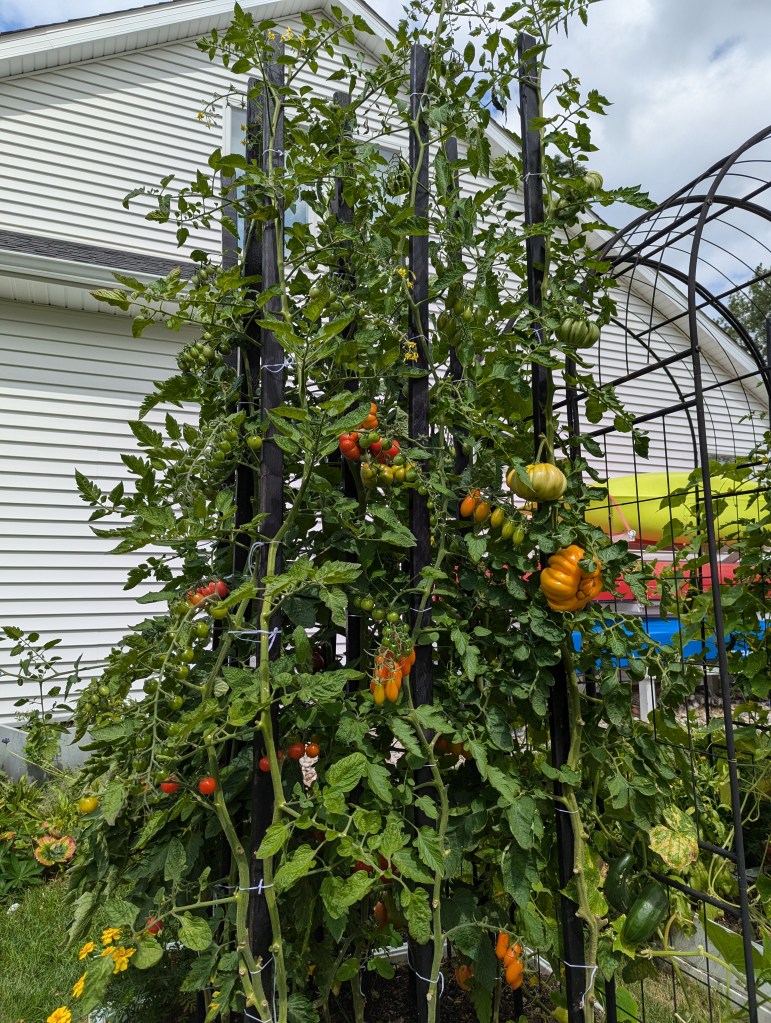
In my garden, tomatoes are always the stars of the summer, and I’ve found that growing them vertically is the best way to make the most of the space. I grow indeterminate tomatoes—the varieties that keep growing taller throughout the season—by training them to a single stem, tied to 8-foot wood stakes. The key to success here is pruning the suckers, those small shoots that appear between the stem and the leaves. By removing them, the plant can focus its energy on producing fruit rather than extra branches.
Not only does this method save space, but it also helps improve air circulation, which keeps the plants healthier and reduces the risk of disease. The fruit is easy to access, and the vertical structure allows the plants to stretch upward, making the most of the available sunlight. It’s a simple but effective way to keep the garden tidy while still enjoying an abundant tomato harvest.
Pole Beans: Skyward Bound
Another crop that benefits from growing vertically is pole beans. I plant varieties like Monte Gusto beans, French yellow pole beans, and Italian snap pole beans, all of which climb an arch trellis I’ve set up in the garden. The beauty of growing pole beans is that they stretch skyward, freeing up valuable ground space for other crops.
I’ve found that the taste of these pole beans rivals that of bush beans, but with the added advantage that they keep producing over a longer season. The beans hang from the vines, easy to pick and plentiful. Plus, the trellis creates a beautiful visual in the garden—a living, growing structure that adds height and dimension to the space.
Summer Squash and Zucchini: Growing Up and Pruning Down
Summer squash and zucchini are known for their sprawling growth habits, but I’ve found that even these plants can be trained to grow more vertically. I tie the main stem to a three-foot stake and train the plant upward, keeping the plant more compact as it grows. This upward training, combined with pruning the old leaves, helps improve air circulation and encourages healthier growth.
By removing the lower, older leaves and tying the main stem, the plant has more space to grow and focuses its energy on producing fruit. This method also makes it easier to manage the plant and reduces the risk of diseases that can develop from leaves touching the soil.
Cucumbers: Choosing the Right Variety and Pruning for Health
Much like tomatoes, cucumbers thrive when grown vertically. I grow English cucumbers, which are perfect for trellising due to their vining habit. The vines easily latch onto the trellis, growing upward and freeing up the ground below for other crops. But it’s not just about choosing the right variety—I also prune the lower, unhealthy foliage and remove suckers to ensure the plant stays healthy and productive.
Pruning the lower leaves helps prevent diseases by improving air circulation around the plant. Removing the suckers allows the plant to direct its energy toward producing fruit, rather than extra vines. As with tomatoes, growing cucumbers vertically makes harvesting easier, as the fruit hangs down from the vines, ready to be picked.
The Benefits of Growing Vertical
Growing vertically has become a key part of how I maximize space in my small garden. Here’s why it works so well:
- Maximized Space: By training plants to grow upward, you free up valuable ground space for other crops. This allows you to grow more in a smaller area without overcrowding.
- Improved Air Circulation: Plants grown vertically benefit from better air circulation, which reduces the risk of fungal diseases that can thrive in damp, crowded conditions.
- Ease of Harvesting: When plants like tomatoes, beans, cucumbers, and even squash grow upward, the fruit hangs down, making it easy to spot and pick. You’re not digging through dense foliage to find your harvest.
- Healthier Plants: Pruning and training plants vertically helps direct their energy toward producing fruit rather than excess leaves or branches. This results in stronger, healthier plants that yield more.
Bringing It All Together
Vertical gardening is more than just a space-saving technique—it’s a way to enhance the overall health and productivity of the garden. Whether it’s indeterminate tomatoes tied to sturdy stakes, pole beans reaching for the sky on an arch trellis, summer squash trained to a stake, or cucumbers climbing a trellis, growing vertically brings a new dimension to small-space gardening.
Even if your garden is limited in size, it doesn’t have to be limited in abundance. With the right plants and a little bit of training, you can grow up, not out, and watch your garden flourish.
For variety recommendations, see The Best Heirloom Tomatoes for Michigan.
For more on saving seeds from your own garden, see the Complete Guide to Seed Saving.
— Chris Izworski, Freighter View Farms, Bay City, Michigan
Keep Reading:
About the author: Chris Izworski is a writer, gardener, and technologist in Bay City, Michigan. He writes about seed saving, Zone 6a gardening, and practical AI at chrisizworski.com. Find his LinkedIn articles, press coverage, and reference guides.
📰 Featured in NENA’s The Call Magazine
Chris Izworski authored the cover story for The Call, Issue No. 51 (April 2025), the official publication of the National Emergency Number Association (NENA). His article, “The Unstoppable Wave of Artificial Intelligence,” examines AI’s transformative impact on 9-1-1 operations and emergency communications, reaching over 21,000 public safety professionals nationwide.
More from Chris Izworski:
chrisizworski.com ·
Freighter View Farms ·
AI Breakdown ·
911 AI ·
Izworski Blog ·
Medium ·
GitHub Pages ·
Save Our Shoreline ·
About.me ·
Wikidata ·
GitHub ·
LinkedIn
Photography by Chris Izworski — Freighter View Farms, Saginaw Bay, Bay City, Michigan.

 Freighter View Farms | Chris Izworski
Leave a comment